Week 14
Algorithmic Folklore, Memes, Intuition
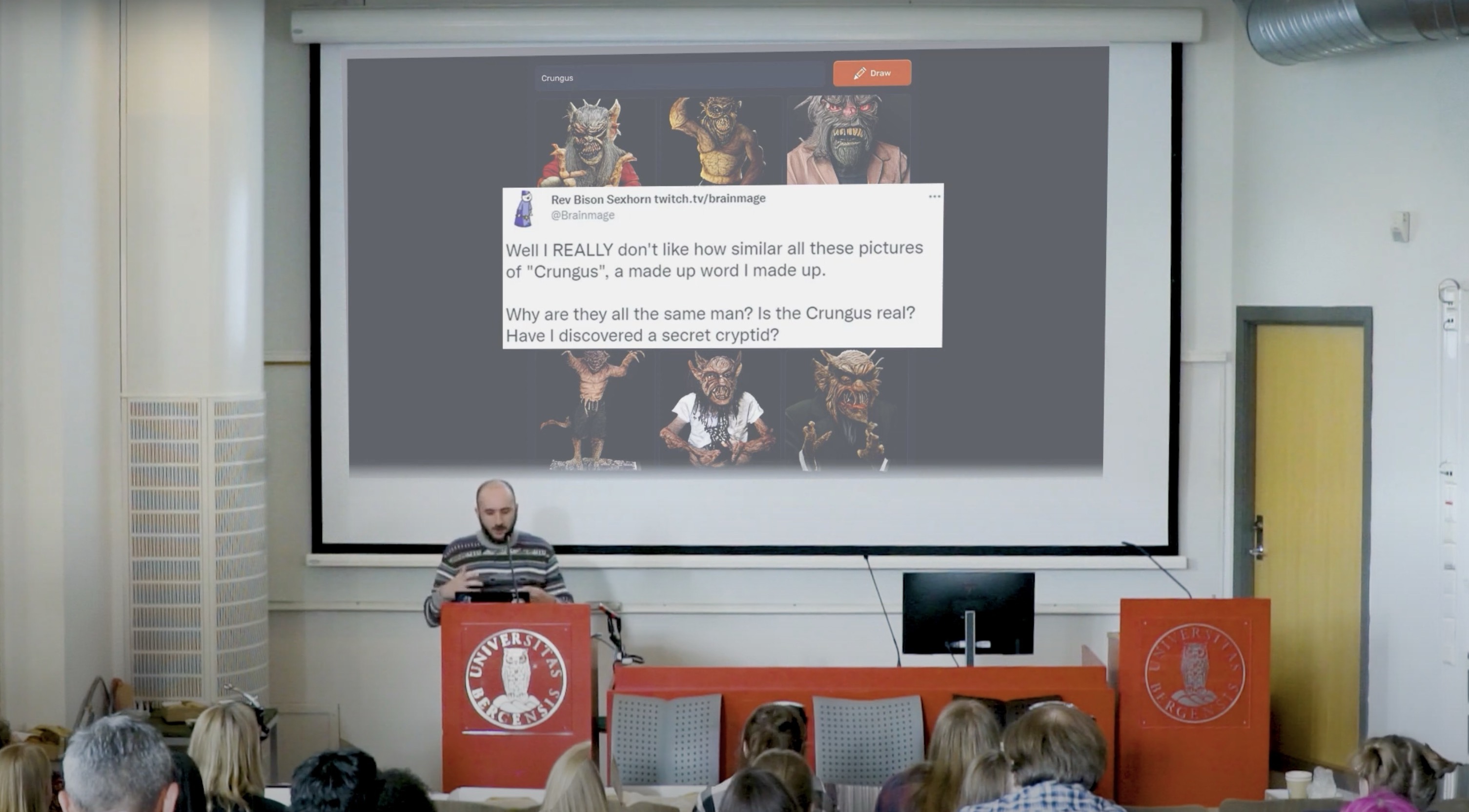
Algorithmic Folklore
Researcher Gabriele de Seta tells the story of the ‘Crungus’, an imaginary brainchild of comedian Guy Kelly and the Dall-e image generator, Craiyon. Further investigation revealed that ‘Crungus’ was a made-up word that somehow resulted in the generation of many similar-looking cryptids.
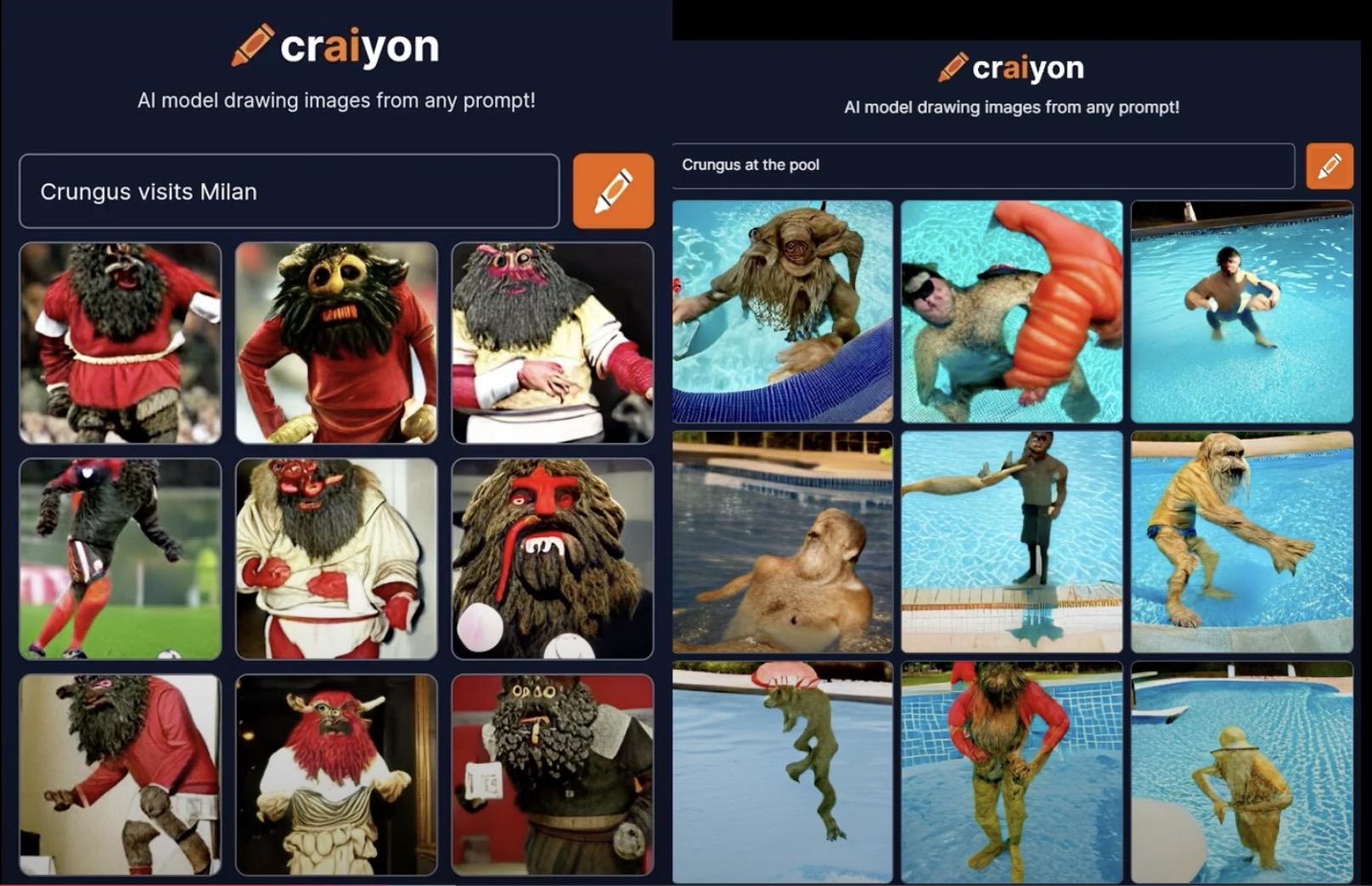
Crungus living different lives
Eventually, ‘Crungus’ took on a life of its own. With each new generation of the creature, the creature became more real, generating visions of a life well-lived. Gabriele defines ‘algorithmic folklore’ as the repertoire of genres and practices resulting from the encounter between vernacular creativity and everyday automation’. Indeed, the mythological ‘Crungus’ is yet another manifestation of humanity’s old-world metaphysical longings for myth-creation, and a confirmation that that is something AI can provide.
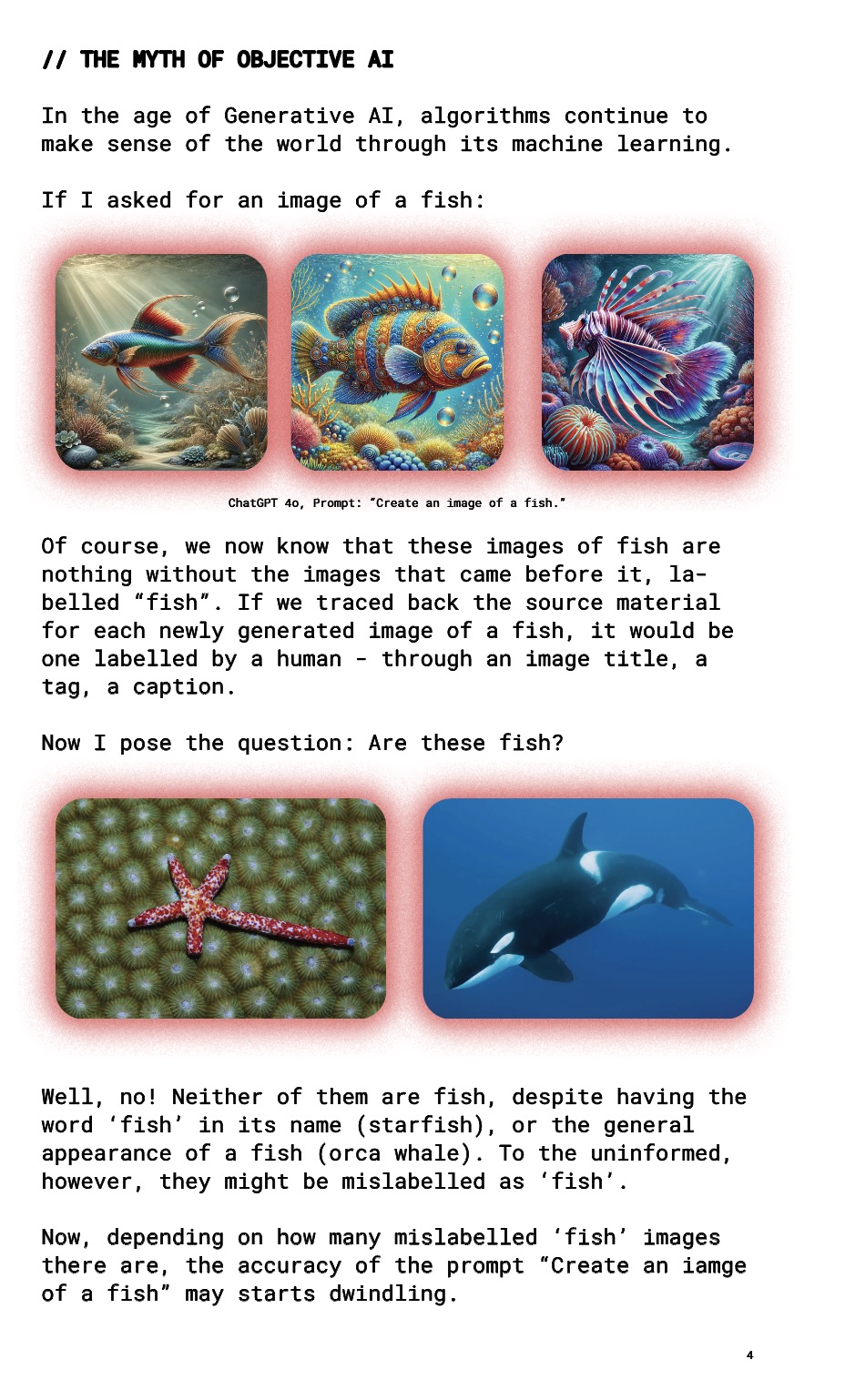
What does a fish look like?
I wanted to better understand how a bias might be embedded in an AI system. I then came across a
paper by Alan F. Blackwell, "Objective Functions: (In)Humanity and Inequity in Artificial
Intelligence". The paper took me through what it really meant to be objective or subjective in AI
models. He studies how objectivity in AI can be measured, recorded and replicated, and how often
that is a near-impossible to ask of an AI. To exercise this new knowledge, I started writing a
little story about a fish.
I must admit, there are some generalisations here, and there are a lot of factors unaccounted for.
Regardless, it was a simple exercise that allowed me to understand AI bias better. What if we
replaced the word fish with 'criminal'? What does that look like? What if it's replaced with
'president'? What if we replaced it with 'gay'? The point here was that we can never really know how
an AI will interpret a word, depending on the complexity of the situation.
Every school
student is taught to reduce “big data” to a single quantity by calculating the average
(“mediocre”), to estimate the trend line through a sequence
of varying observations (“linear regression”), or assess whether a re-
peatedly tossed coin is fair or not (“logistic regression”). These simple
intuitions start to falter only where there are many dimensions of data. (Blackwell)
Especially for subjective human decisions based on individual perspective and morals, can an AI
model ever claim to be making a "fair" or "objective" judgement?
The Black Box as an Oracle
In 'The Black Box Society', Pasquale’s framing of opaque AI models as a ‘black box’ paints a good picture of why this is a problem. The black box represents AI model’s opacity and unaccountability, highlighting the implications of data-driven decision making. The lack of transparency behind the algorithms that generate our outputs renders this very system as a modern form of divination. The definition of divination varies across cultures, but most refer to the practice of seeking meaning, truth, or direction from non-human sources.
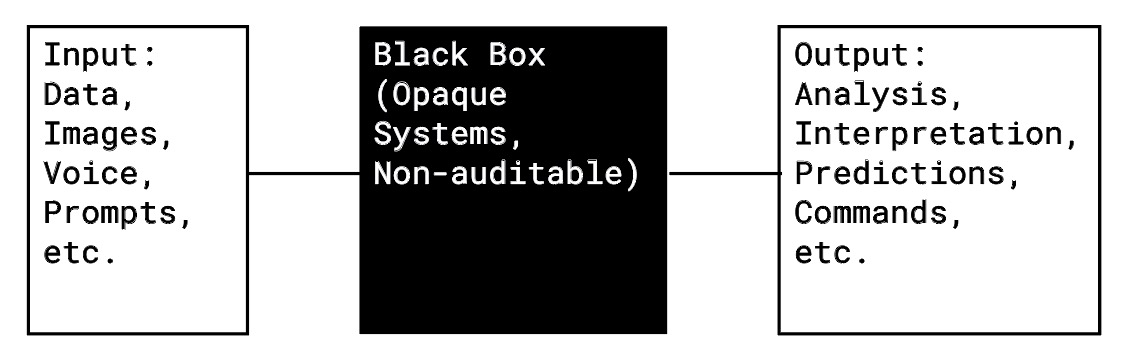
Black box as a metaphor for opaque AI systems
Most systems of divination rely on the same formula. Whether it's astrology or tarot reading, the
common denominator is belief in a more-than-human guidance. One incomprehensible and more intelligent
by man. One with good intentions to provide guidance for the recipient. This brings up a few
questions...
- How ‘rational’ can our algorithms really be?
- Is there a future in which we build an infallible belief in AI, mirroring other divinatory
practices?
- What role does our divinatory instinct have to play in this trajectory?
- Will we lose our agency over our decision-
making and meaning-making abilities?
Of the many implications of such AI agents, this research concerns itself with passive consumption and
lack of diversity in information.
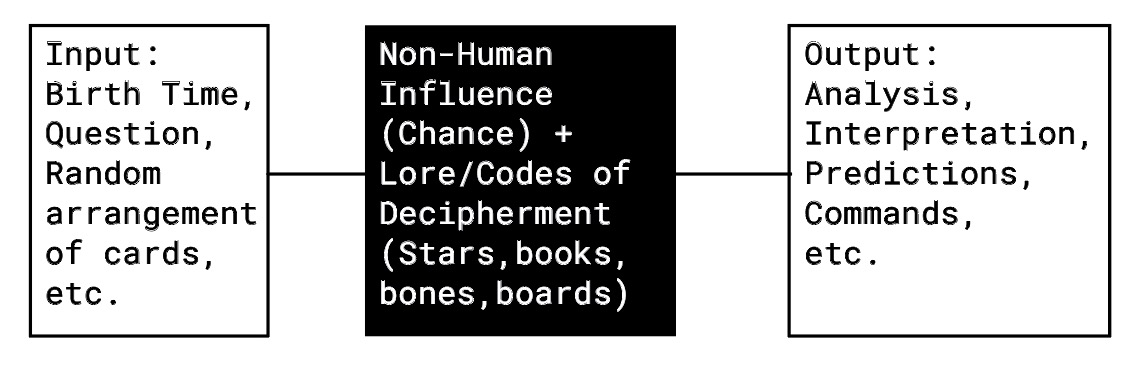
General Divination Process (Morgan)
This poses a scary reality where the AI becomes seemingly intelligent for us to place blind faith in, for the simple fact that it is able to repeated provide us with guidance on everyday uncertainties and anxieties.
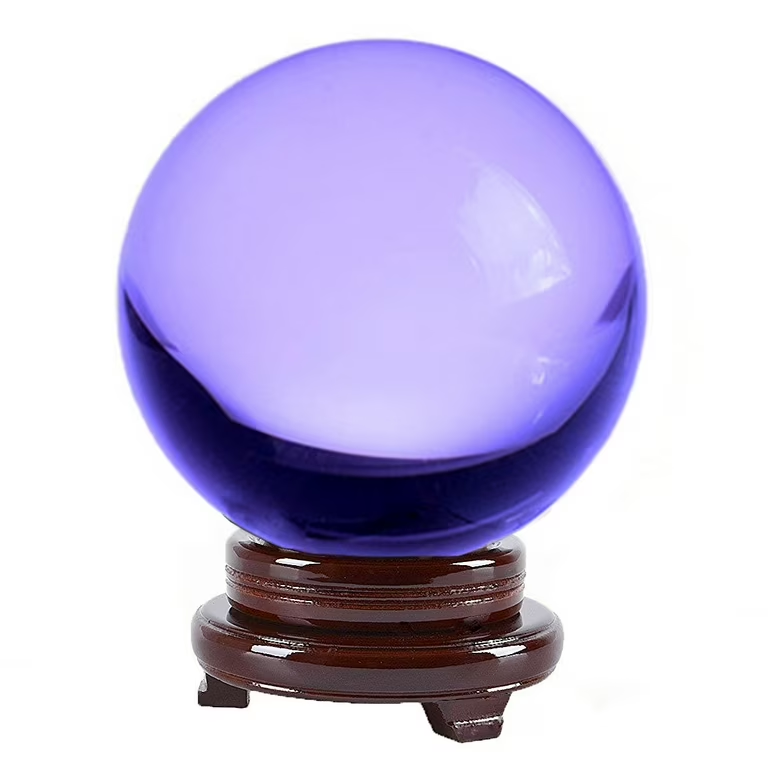
Crystal Ball
(Scrying)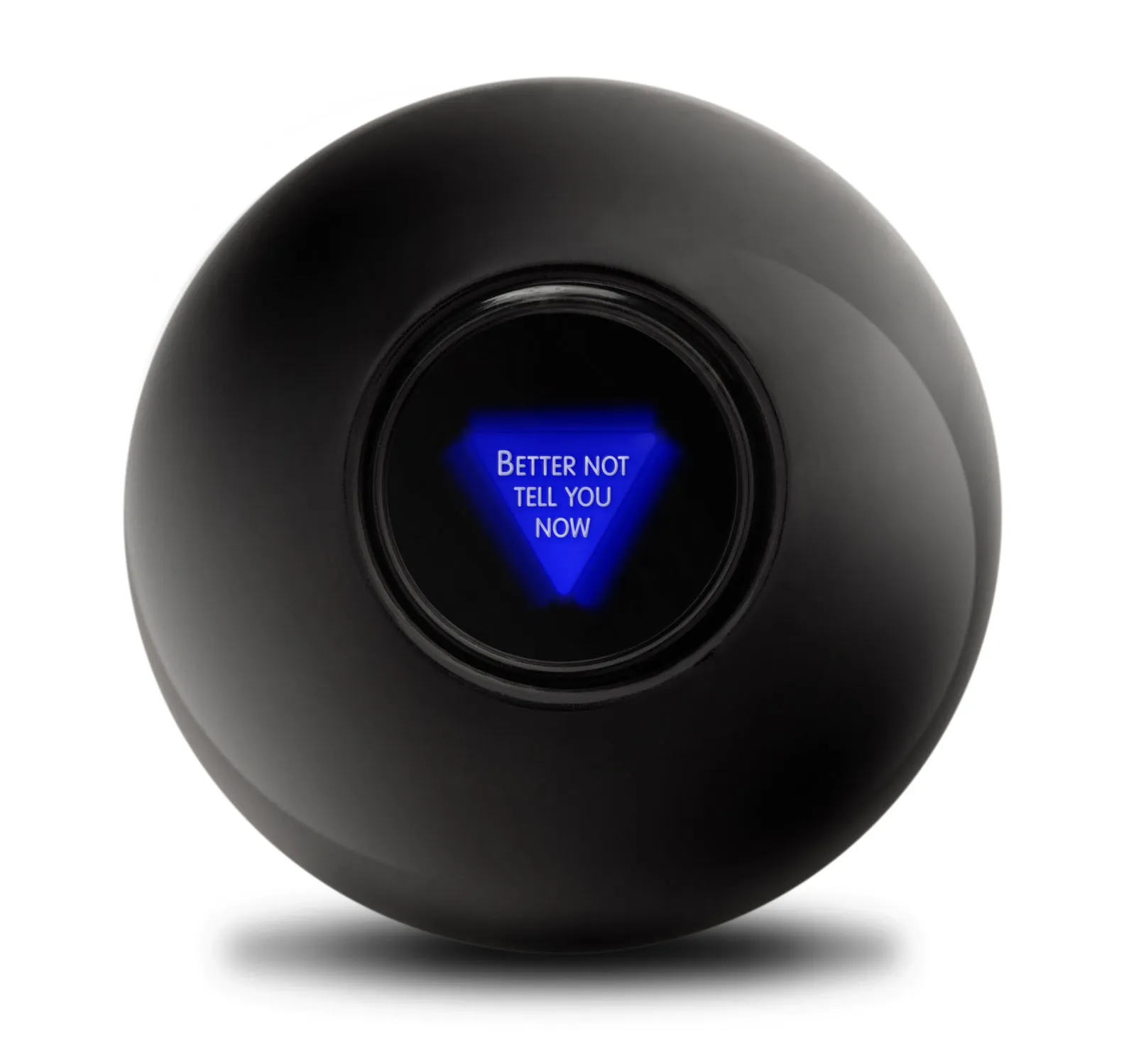
Magic 8-Ball
(Randomness, Set Answers)
Amazon Alexa
(All-knowing algorithm)
Techgnosis, Erik Davis
"Each new medium of information technology — talking drums, scrolls, printed books, computers – we
find new ways of meaning-making, creating new opportunities for thought, perception and social
experience."
Designing Technoculture, Anna Balsamo
"Designs are historically constituted...Innovations coalesce through specific practices of
cultural reproduction—the processes whereby culture is renewed, reenacted,
and regenerated."
If the crystal ball, Magic 8-ball and Alexa were built in the image of the one before, a common denominator might be their source of 'knowledge'. For the Alexa, its source of magic comes from the black box algorithm. If it is regarded as a modern day crystal ball - a source of guidance/decision-making - it is then imperative to investigate this system of belief and how our divinatory impulses might affect our relationship with the algorithm.
Intuition as an Act of Resistance
Referring back to last week's writings about intuition and noetic leaning, if we are indeed hypothetically moving towards an AI superintelligence that delivers an ‘objective truth’, perhaps leaning into the ultimate subjectivity of our intuition is the ultimate act of resistance for crashing the algorithm, and leaning into our embodied knowledge to regain agency over decision-making.
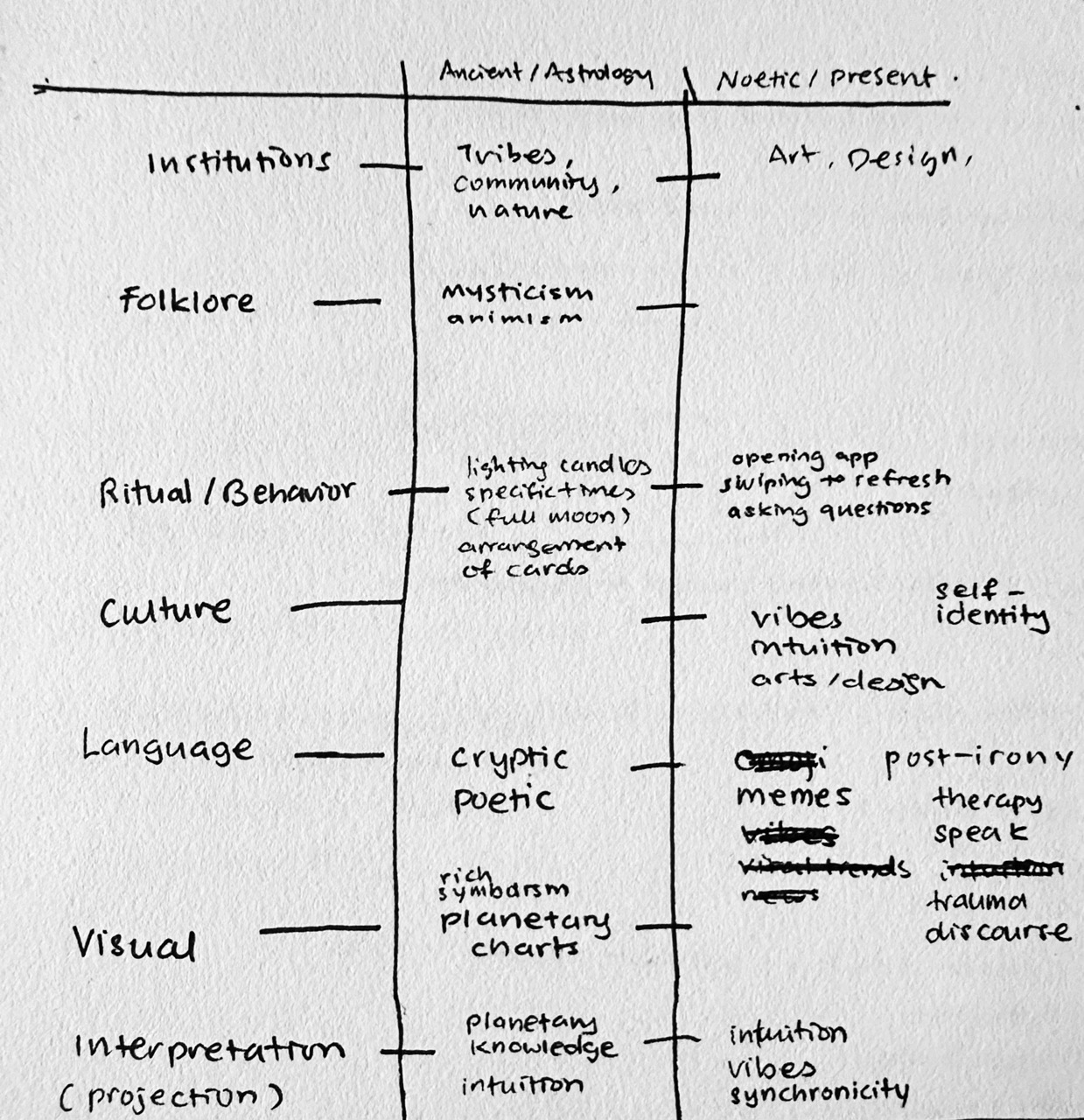
So, I started drawing a mindmap to try to find something that I could use to bring the old and new together. I was looking for acts of intuition, old and new, that would make the prototype accessible to a younger, post-internet audience. I then started thinking of memes as an everyday internet language. It encompasses most of the qualities I was looking for, intuition, irony, visual – there is so much to unpack!
Tarot as a hermeneutic encounter
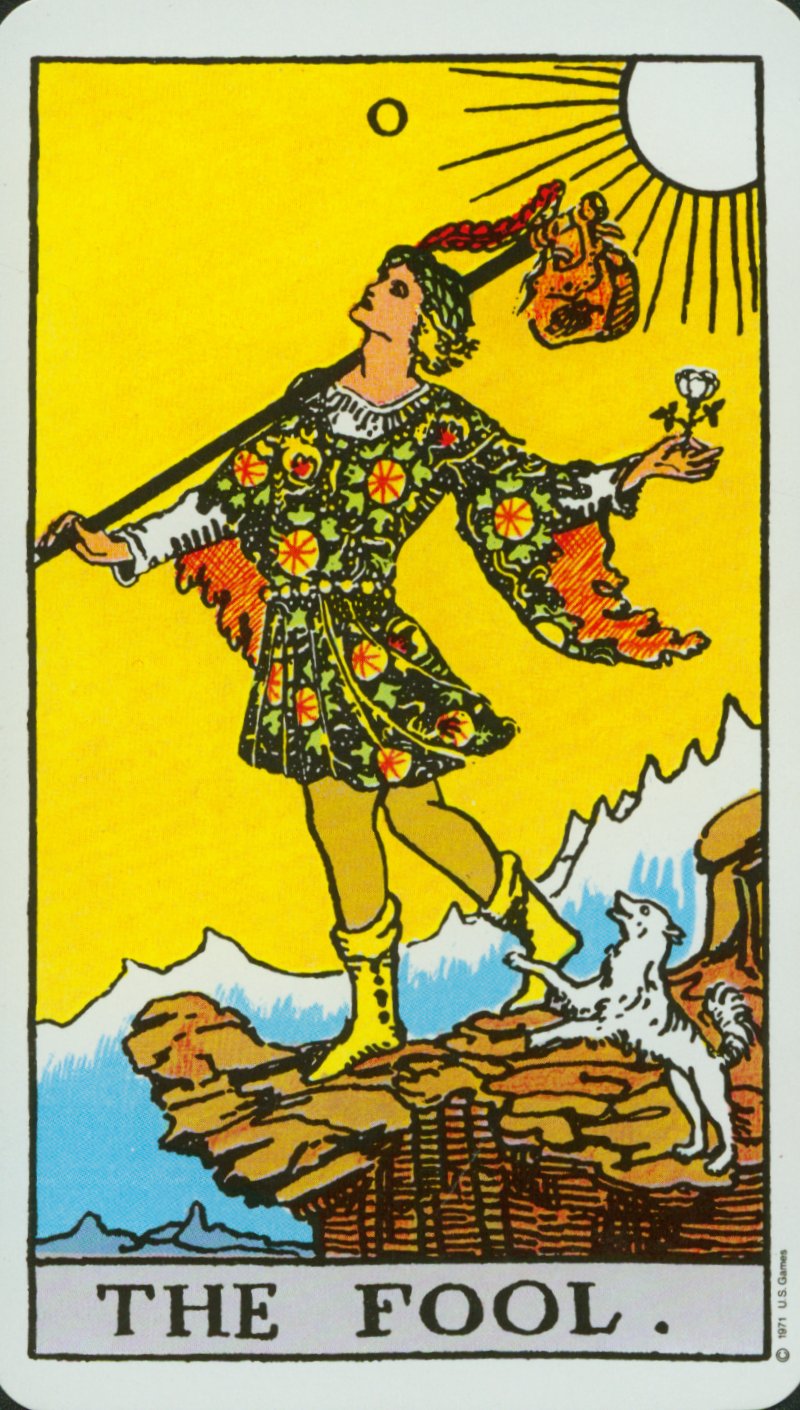
Podcast host of The Tarot Diagnosis says, “There’s something about the images that allow our brains
to unlock memories and thoughts and feelings. My approach is secular and from a standpoint of self
reflection. What can we discover about ourselves?”
Evidently, the basis of tarot reading is human intuition. The card acts as a mirror from which we draw
meaning from, a catalyst for introspection and healing. To a non-believer, this process could be
deemed “irrational”. After all, there is no scientific basis to believing a card more for its
selection by chance. The foundation for its effectiveness is belief. Belief in its ability to:
1. Be impartial
2. Be a source of more-than-human knowledge
3. Be a tool for healing
Memes as a hermeneutic encounter

It has become almost impossible to talk about the internet without memes. The concept of the meme was
coined by evolutionary biologist Richard Dawkins (1976) as part of a theory that explained why certain
ideas, catchphrases, trends, and other pieces of cultural information replicate through a population.
Whether its images, text, video or just a concept, Internet memes have changed the way we communicate
with one another, this phenomena which Cole Stryker calls the “language of memes” and “visual
vernacular” that allows people to communicate emotions and opinions. Seemingly inconsequential and
humorous, the meme has been a source of study for meaning-making. The humour of memes itself primes
itself as a mechanism from which we create symbolic boundaries, who gets it? Is this person’s sense of
humour offensive? What does that say about them?
All this to say that there is much we can say about memes as a medium for interpretation, one that is
particularly relevant in the post-internet age.
It is simultaneously individual, yet collective.
It is innocuous, yet offensive. It is cool, yet
cringe. It is rational, yet irrational.
My next prototype thus aims to use tarot as the setting, with memes as a language for interpretation. The aim is to spark discussion about intuition and interpretation on the internet. As a language that is so personal, intuitive, and complex, how does an AI interpret such images to decide what it knows about us? It might be easy for the algorithm to hear us say "shoe" and show us a Nike advertisement, but is it able to grasp the more complex elements of our online identity?