Week 2
Explorations into the Intersection of Mysticism and Technology
Fascination in Belief
Recontextualising my UFO obsession as a skeptic...
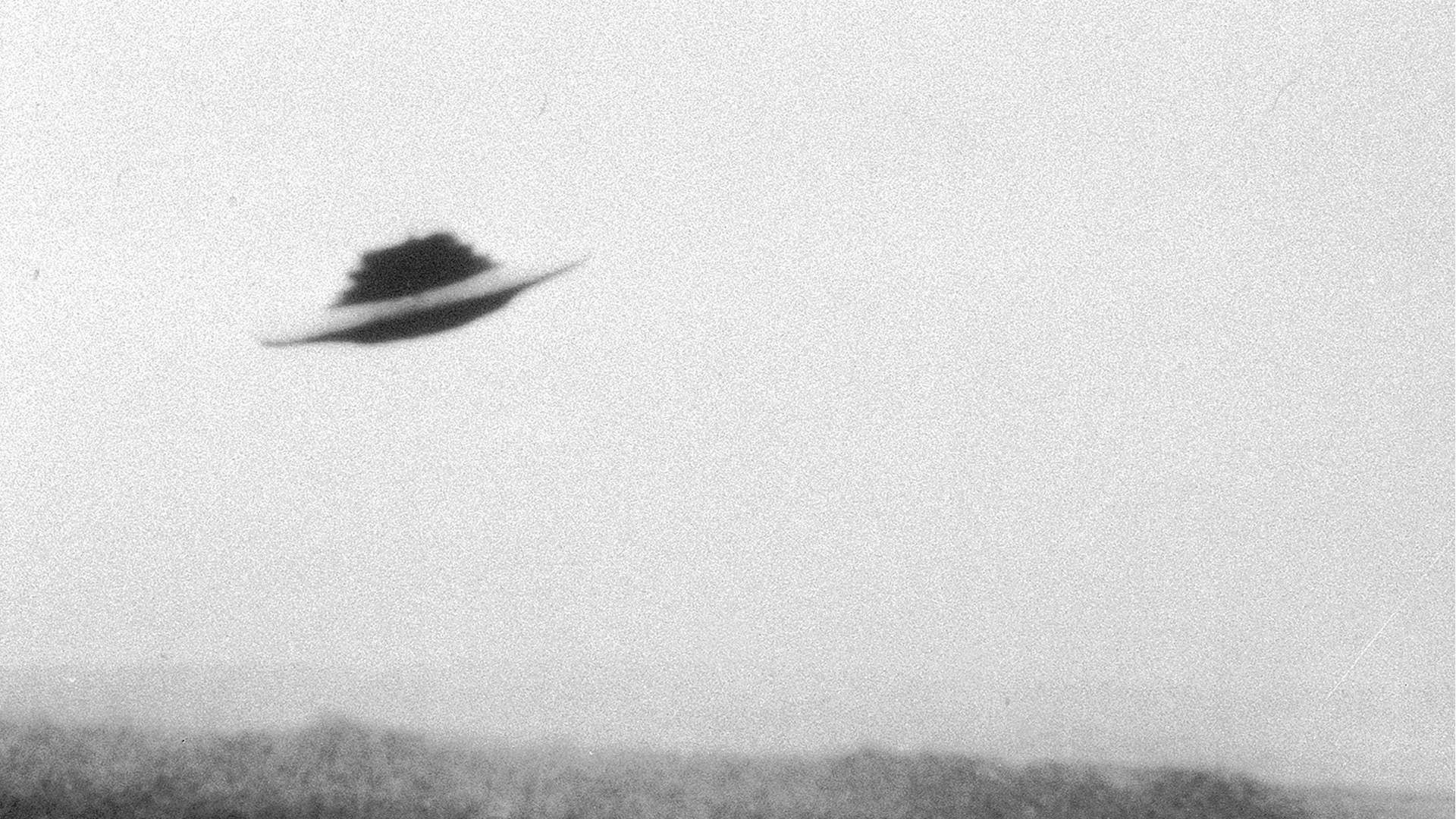
My week started with a book I bought in a bookshop in Barcelona — UFO Presences. A documentation of the UFO phenomena in the US, the book "conceptualizes the places where these strange phenomena have transformed their surroundings". Through this alien phenomena, the book studies the development of the world of communications and the image. Through that, the legitimisation of this otherwise mysterious and unknown phenomena. I initially picked it up because of my fascination with UFOs that can be traced back to my hunts for UFO books when I was a little kid (and also the book design was yummy).
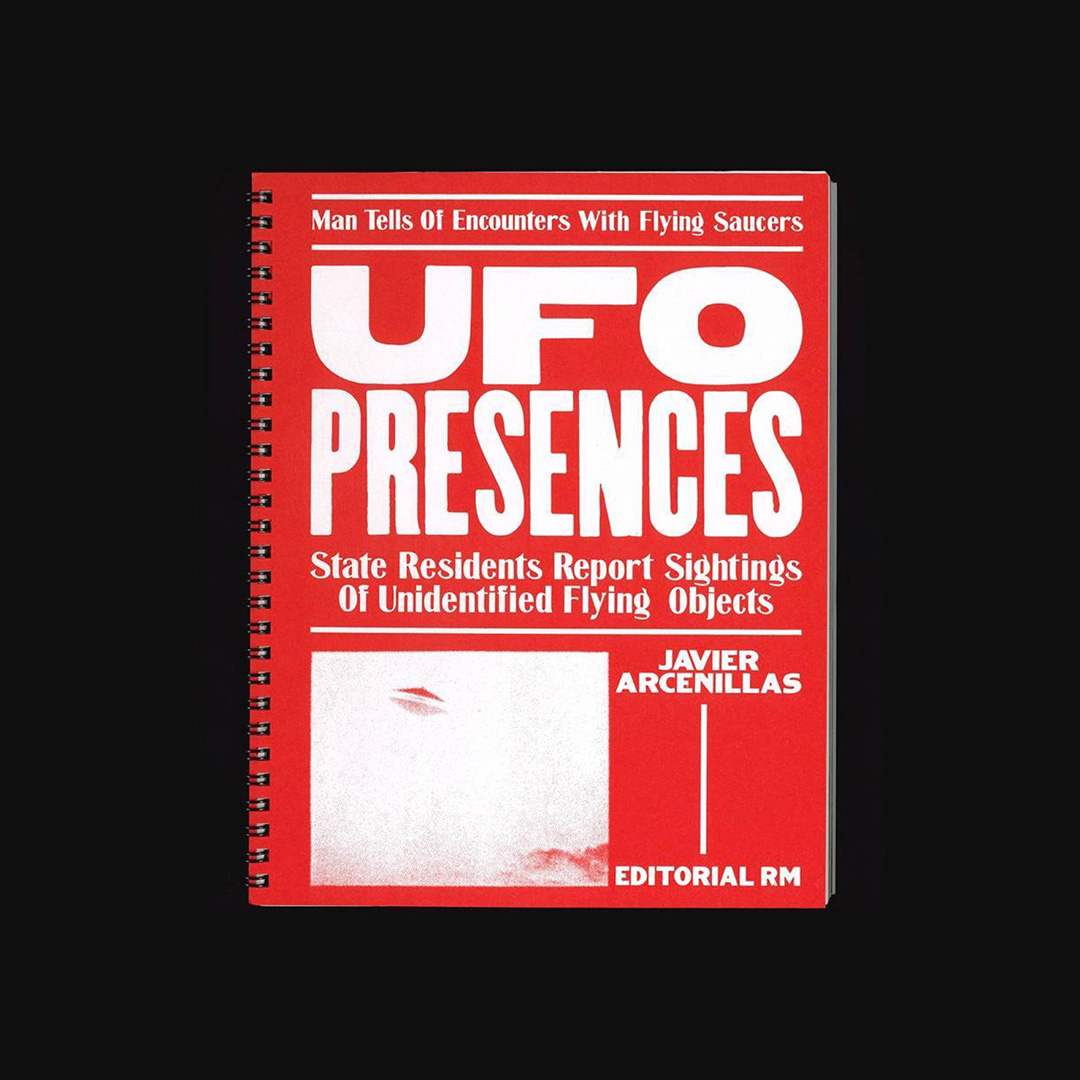
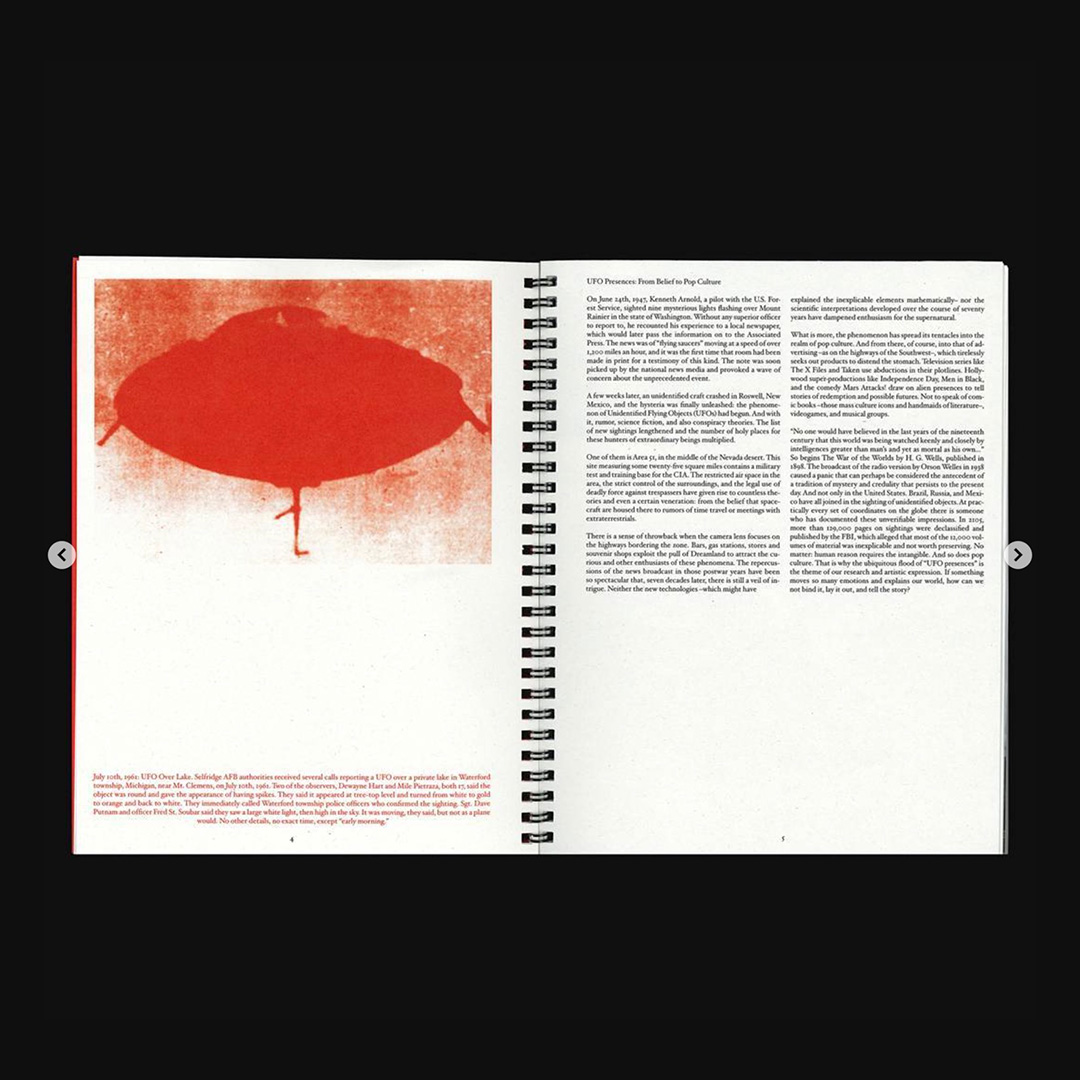
I never gave the validity of the stories much thought. As a kid, I just fully
immersed
myself in the fantasy of these otherworldly creatures, and the mystery of little
objects, anecdotes, experiences that surrounded them. It was very much the
strangeness
and mystic of these alien creatures and the myths surrounding them that I was drawn
to.
I think I always viewed it as a subject of fiction that is akin to watching a horror
movie. So I was pleasantly surprised to find that this book studied the alien
phenomena
through the lens of media and image production.
It was like understanding that part of my childhood experience, as someone who has
experienced the headspace of (almost) a believer, and now as a skeptic. I wanted
to now see if I could study AI technology through this same lens of cultural
discourse of belief and subconscious behaviour.
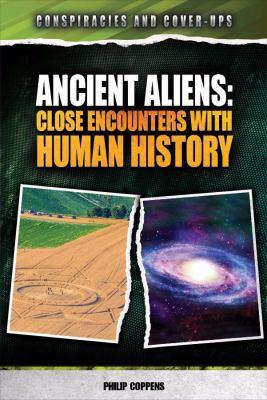
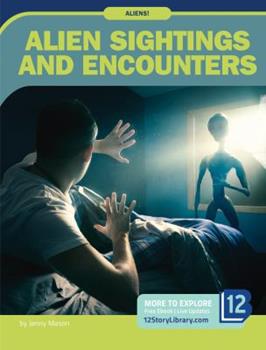
For context, these were the kinds of books I would get at the library.

Tech x Spiritual Memes
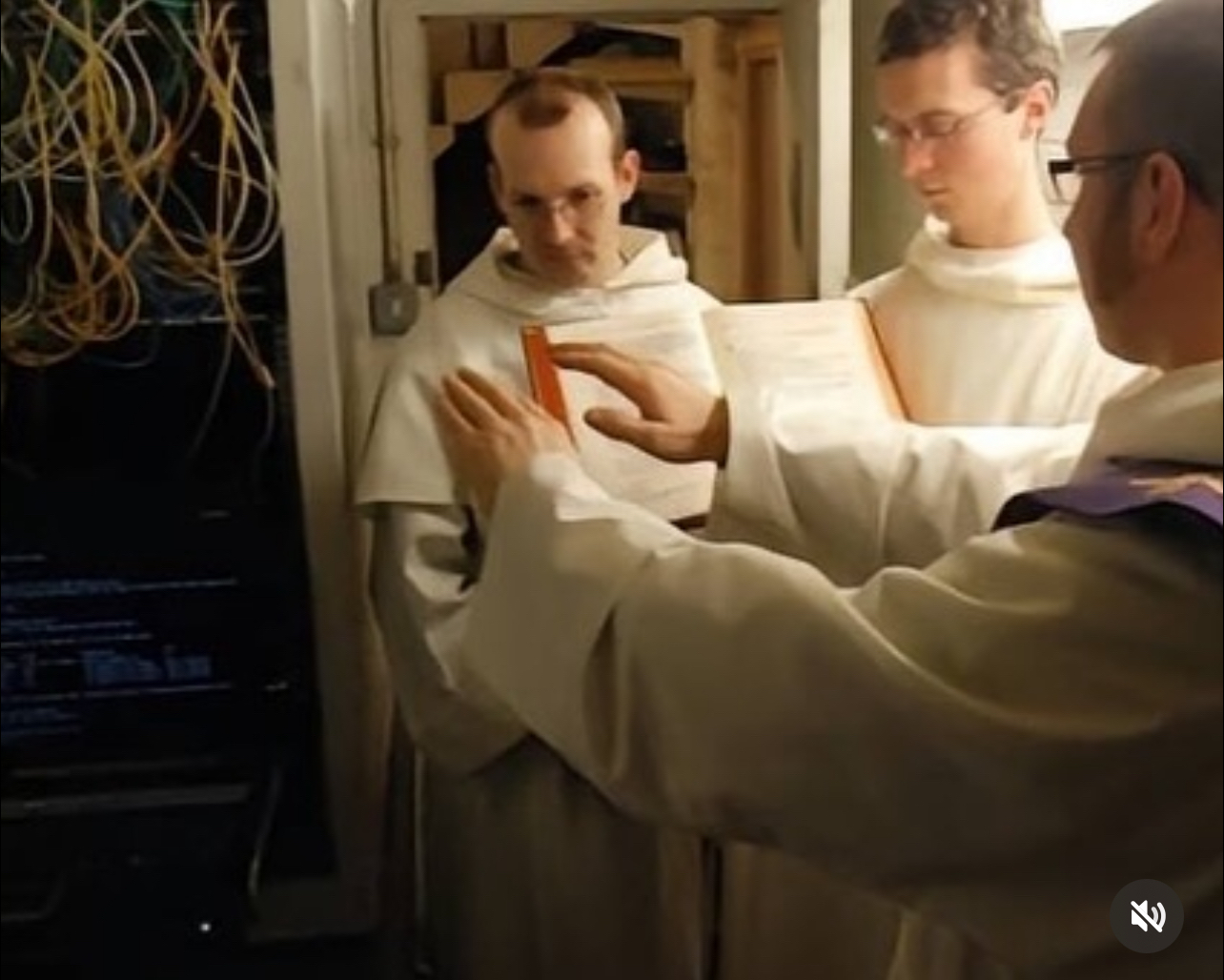
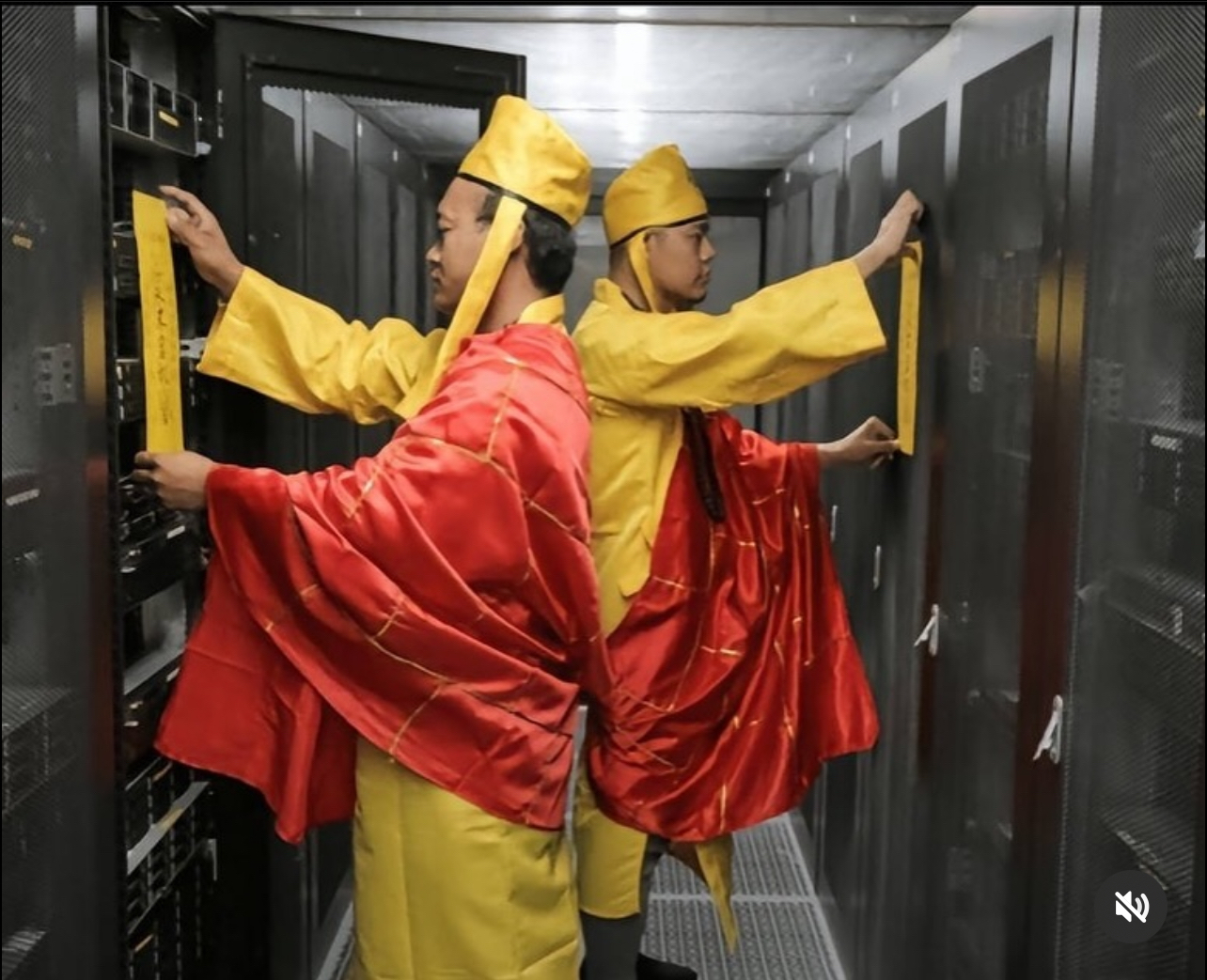
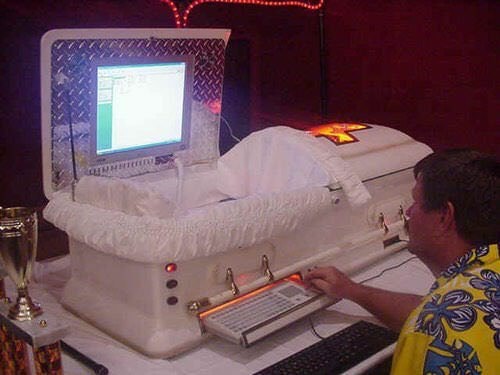
I also found a bunch of images circling on the meme circles on the internet depicting some technology being incorporated in religious rituals and vice versa. I share a similar fascination with the people reposting these, and I think this fascination deserves to be studied further. My theory is that people are inherently intrigued by these two seemingly unrelated themes being put together because they see a value in viewing technology from a spiritual POV.
Aesthetics of the Spiritual
I also found an article on It's Nice That called Heralding the ancient and otherworldly charm of Future Medieval graphics documenting a trend in which people find fascination in old world graphics.
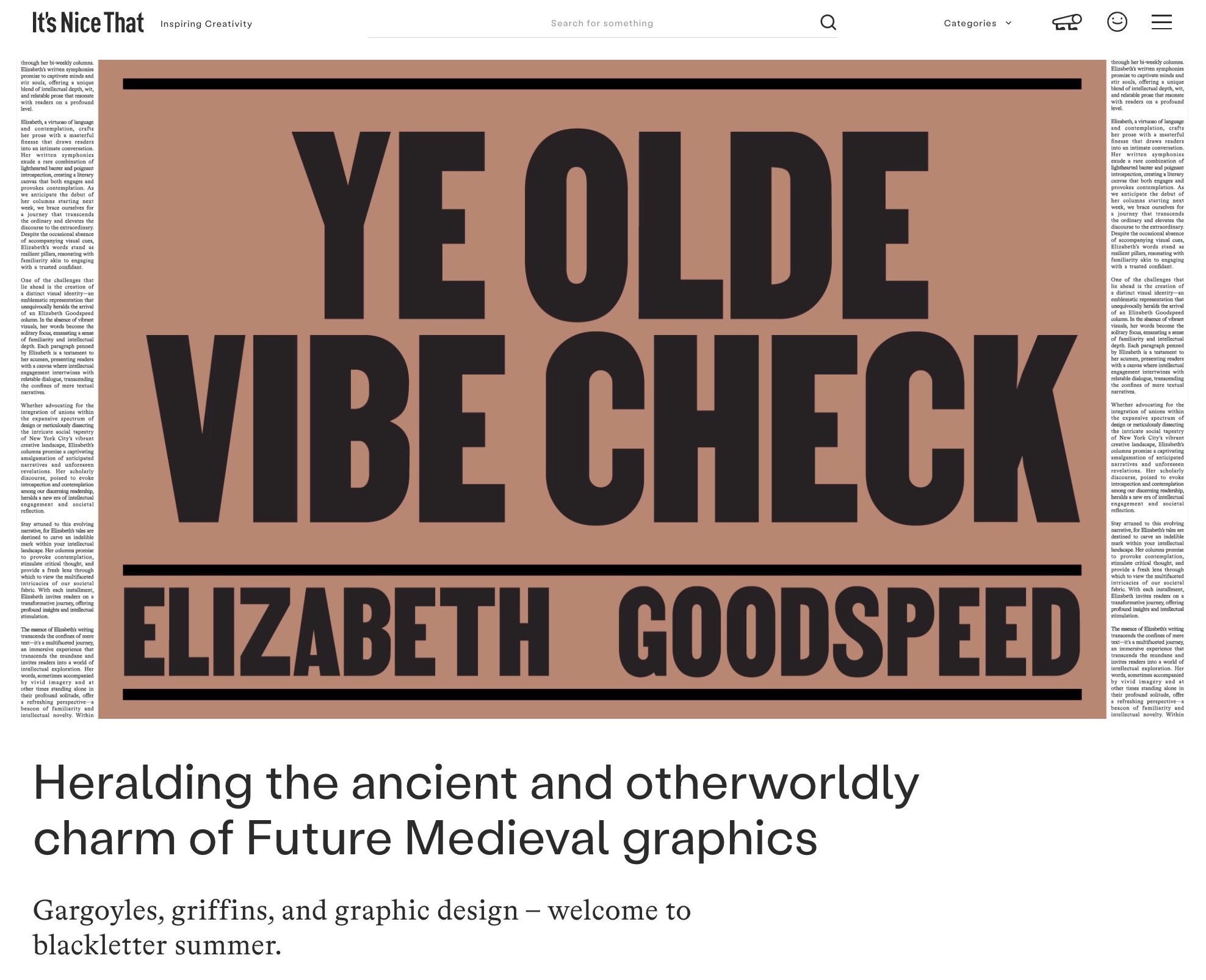
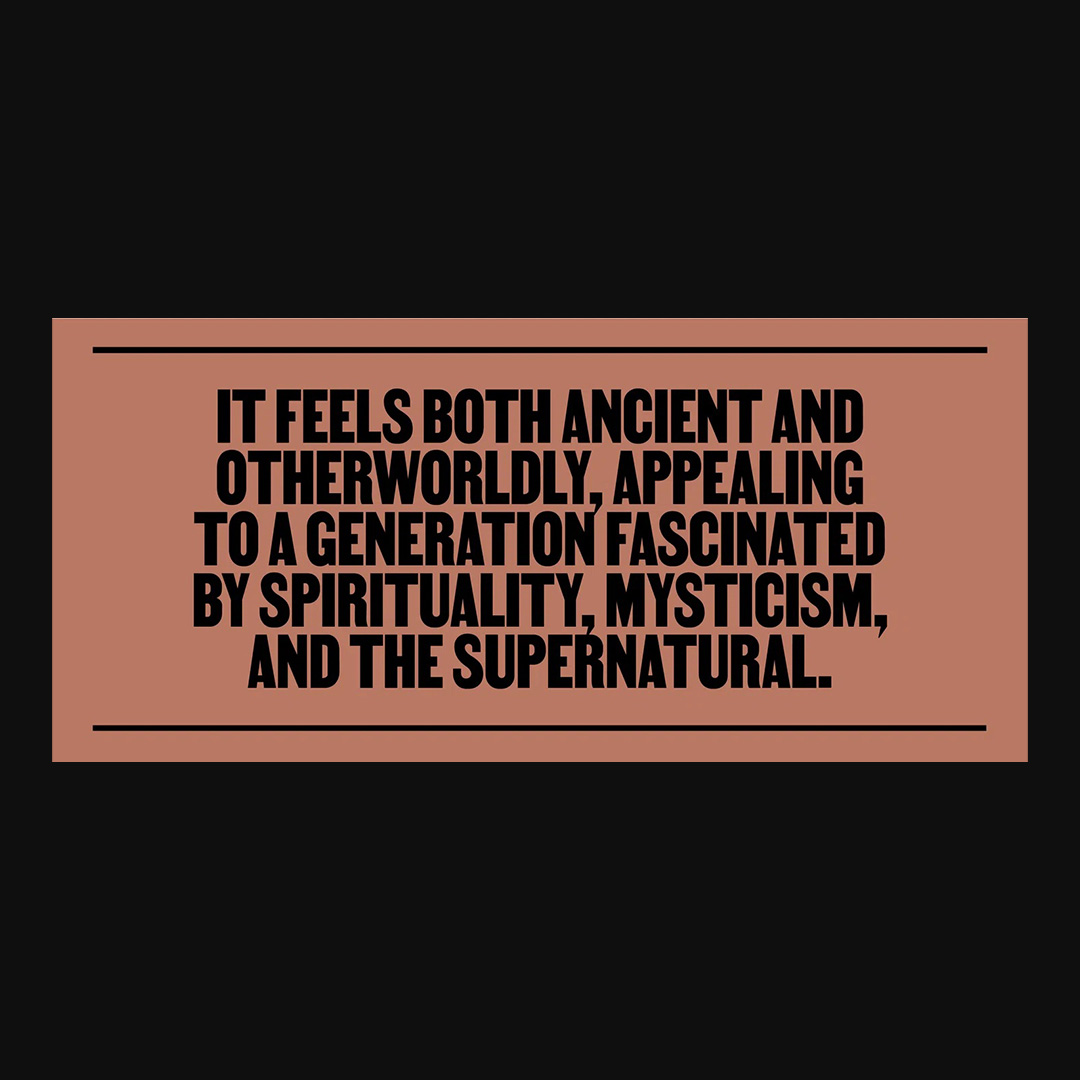
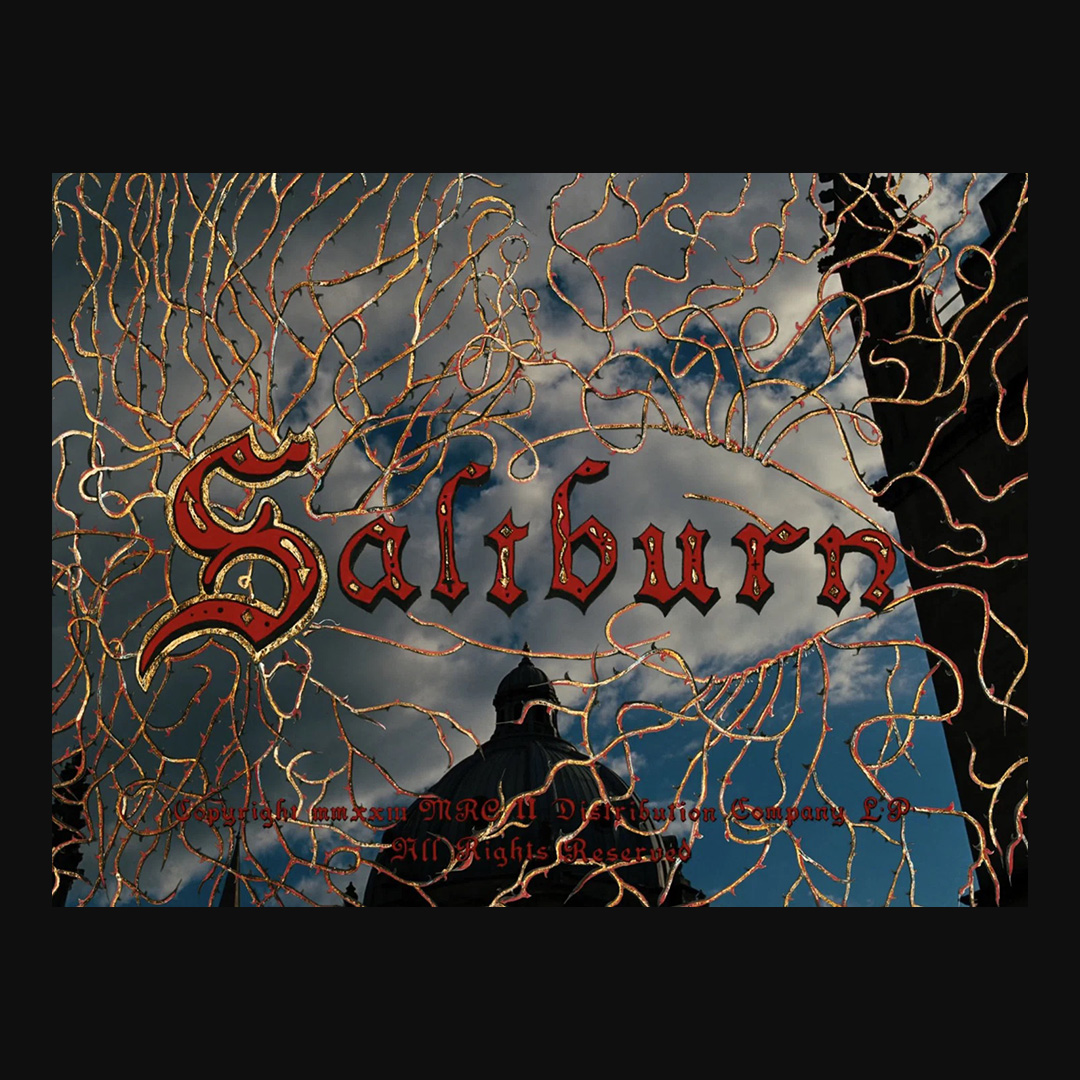
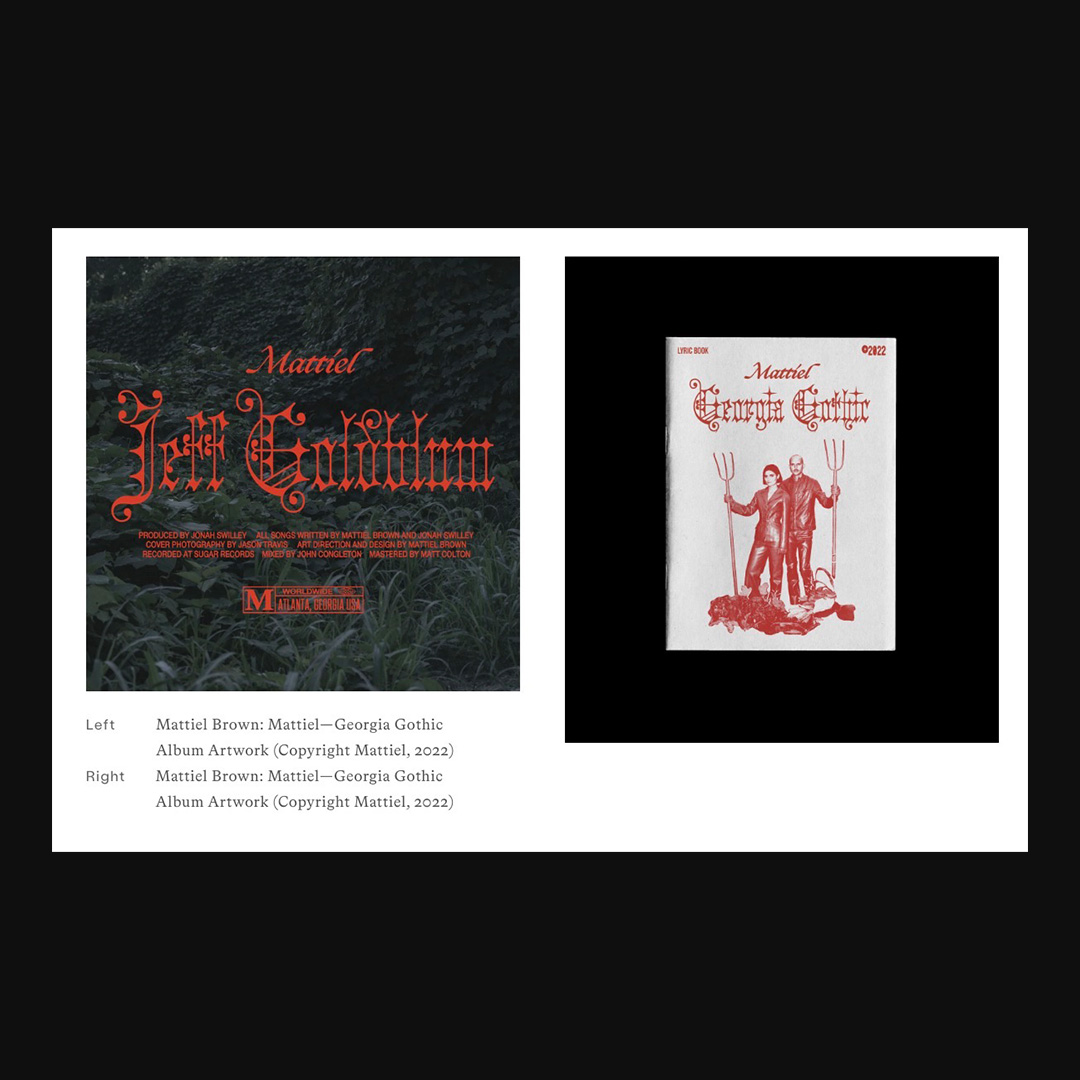
The writer posits that:
The rise of Catholic-core and occult aesthetics on TikTok seems relevant here too,
with both traditions offering visually rich and highly symbolic imagery that
resonates strongly with a disenchanted population...Future Medieval is a collective
acknowledgment of the messiness of our current reality: an era marked by chaos,
uncertainty and deep societal divides. It’s no surprise that the aesthetic language
has shifted accordingly.
Purely from a graphic design POV, I thought it was interesting that the kind of visual
aesthetics we are drawn to, owing to cultural shifts, has also called out our innate
fascination with the spiritual. This allowed me to reflect on how my fascination with
this topic did not come from nowhere, it was a shift that I was experiencing together
with a broader cultural zeitgeist.
AI = Religion?
Inspired by the frameworks of Esoteric AI, I started thinking of the ways AI,
Algorithms, and technology could be studied through the same lens of the
enchanted.
I
thought of how, when it came to unknowable (debatable) subjects like religion and
aliens/UFOs, there was always a way to study human behaviours around them. Why have
people turned to religion as a north star for their way of life, for answers? Why
are
people fascinated with the subject of aliens, even though its something that hasn't
been
legitimately documented?
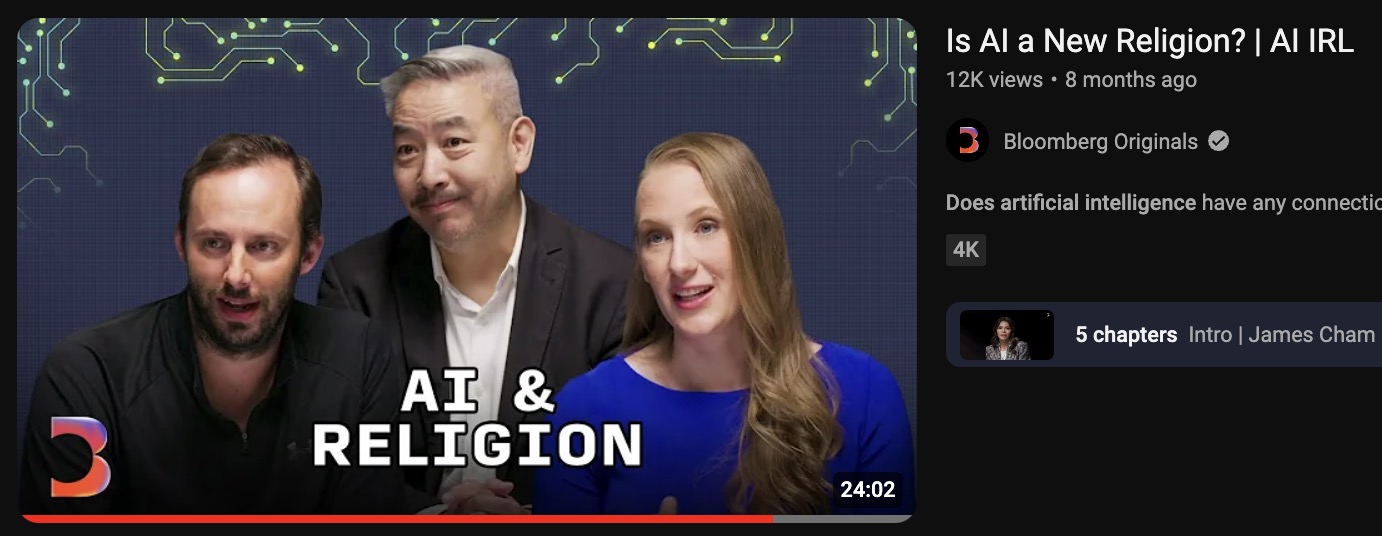
I also chanced upon this video that held a discussion about the intersection of AI
and
religion. This helped me formulate a few connections between the way people interact
with religion and new AI technologies(right).
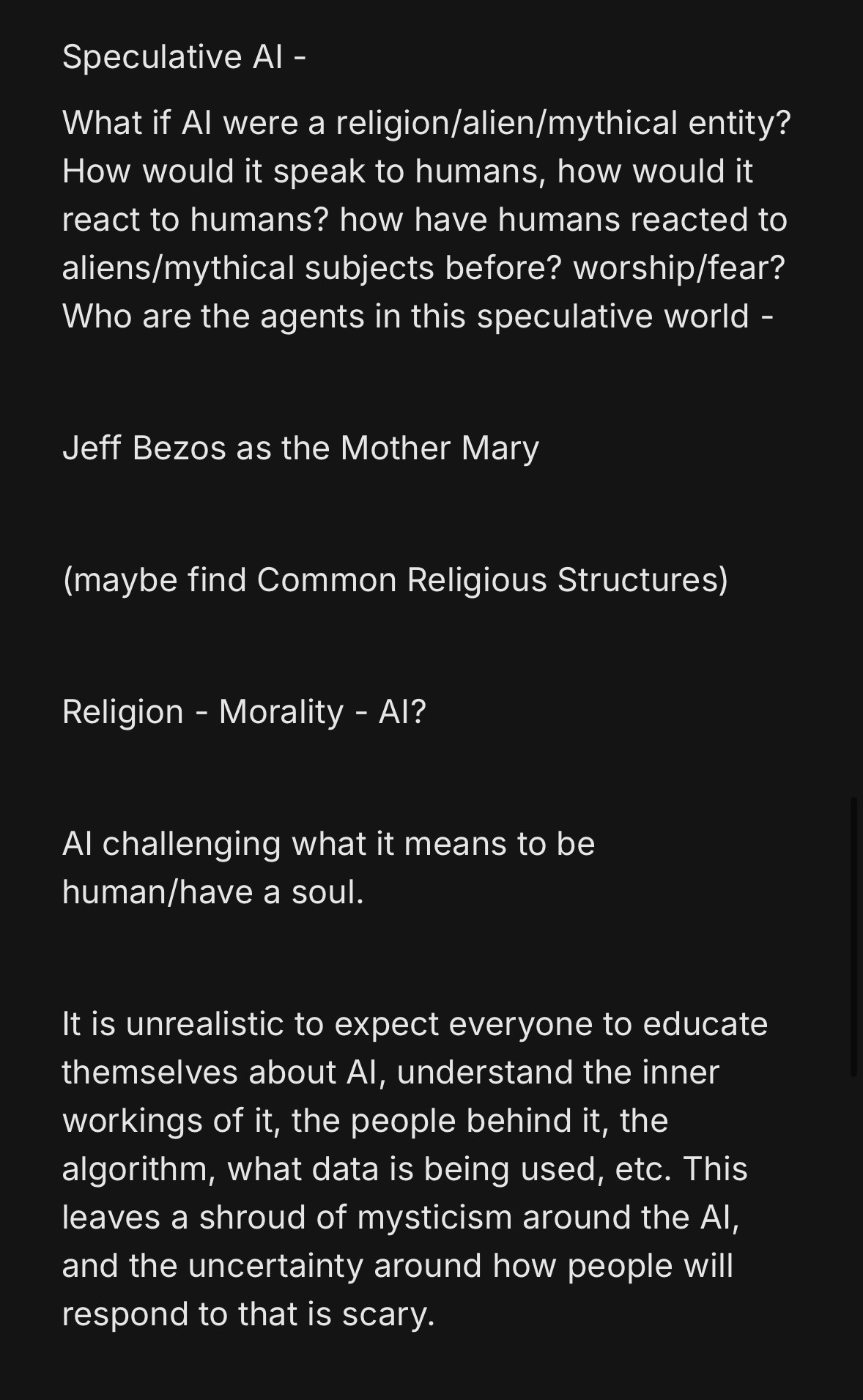
Drawing connections...
Then, I started formulating a problem statement that could leave me with a broader research objective.
The sudden rise of AI and algorithmic systems of control have led these technologies to
become nearly unavoidable in our everyday lives — whether it’s in our TikTok algorithm or
seeking therapy advice from ChatGPT. However, the inner workings of AI still remain mostly
an enigma to many.
It is perhaps unrealistic to expect all users (voluntary or involuntarily) to educate
themselves about AI literacy – ways to safely and ethically participate in the system.
How can I use speculative design and fictional realities to help us make sense of or manage
the mysticism around AI?
The Internet as a Space for Spiritual Practices
The more I researched, the more I realised that there was already a wealth of discussion
about this very topic of AI being viewed as religion, or even used in religion. There
are also many projects that have explored AI and algorithms through the lens of
spiritual pracices such as Tarot Card readings. It was comforting to know that I wasn't
alone in drawing these connections and meant that there were a lot of resources for me
to draw on. On the other hand, I felt like whatever connections I made on my own had
already been talked about and I didn't know where that left me with the project.
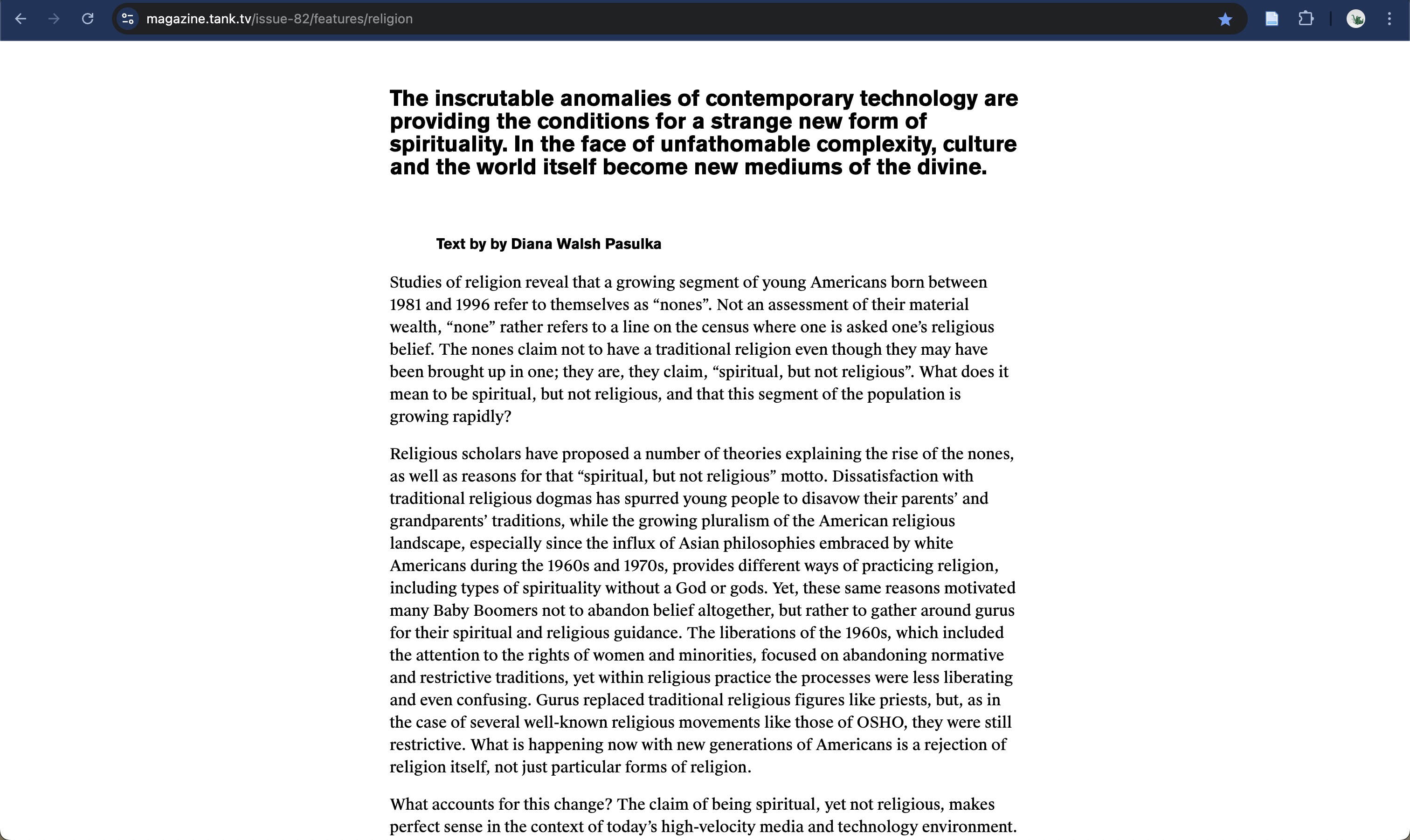
For example, in this article, The
Power of None by Diana Pasulka, she talks about how spiritual information, once
derived from religious figures like priests, has been decentralised in the post-internet
age. It made complete sense to me that, if humankind has not been able to stop viewing
the world through the lens of the spiritual, it would only make sense a place where we
spent a large majority of our time – the internet – also becomes a space for that to
occur.
Explorations in Art and Design
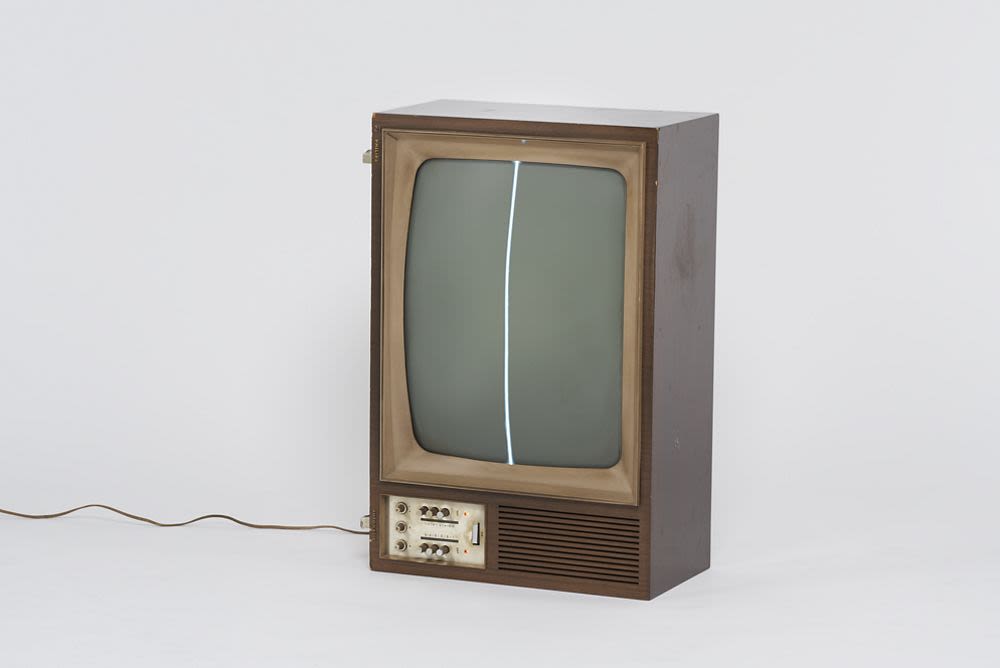
Zen for TV by Nam June Paik
The exploration of technology as a spiritual vessel has also been explored in media art since the 60s, a pioneer of which was Nam June Paik, in which he creates (through installations/performances) discourse around the power of technology to be a medium for spiritual practices.
To Be a Witch In The Age of Surveillance Capitalism by Ginevra
There have also been more recent projects that explores our spiritual relationship
with
technology, like this one that predicts the
past, present and future using the practice of tarot card reading, except the
"cards"
are
replaced with predictive algorithms on the internet like ads, predictive text, etc.
It is at this point that my motivation has become clearer. That new AI
technologies have always been studied through the lens of the secular. How
can I
channel my fascination with spiritual human beliefs into new perspectives
for
the study of AI?
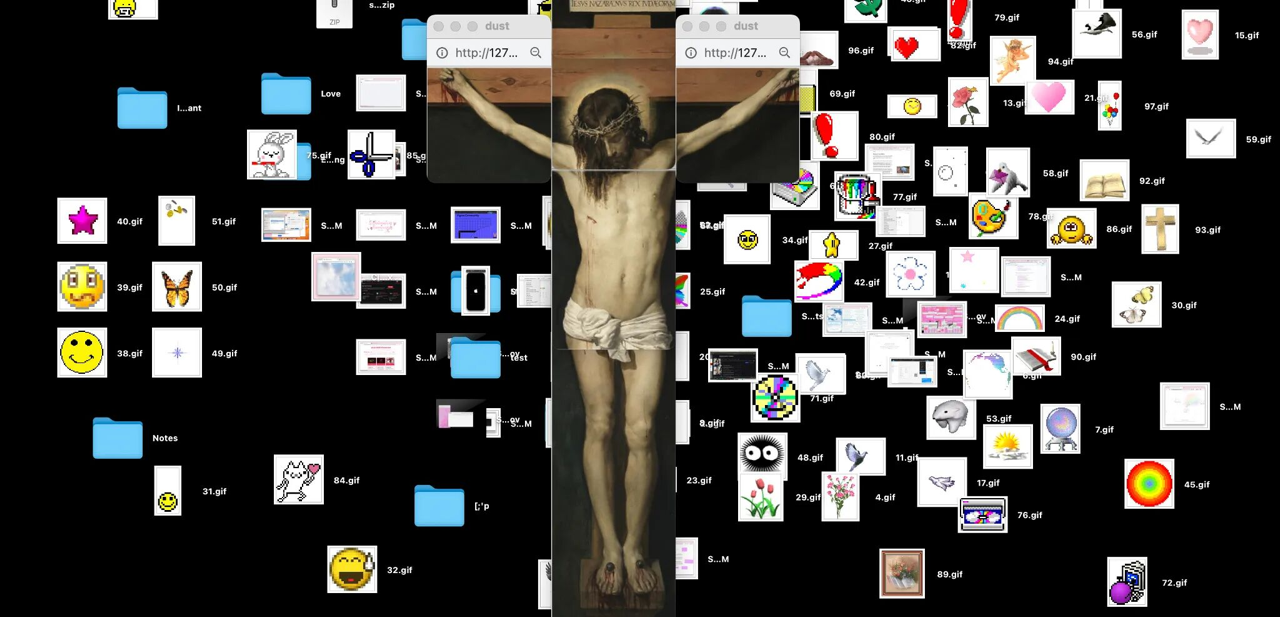
Cruxifixio by Chia Amisola
"In an age where gods are indecipherable from machines, all bodies are
heavens, technology is devotion, and delusions are divine."
In this performance, Chia Amisola previews Himala, a durational desktop
performance piece by Amisola, reenacting the mysteries of the rosary atop of the
operating system and browser. An imagination and ritual of virginal software as a
digital counterpoint to the Philippine Pasyón from the perspective of the
girl-saint: the pure, sacred, transitory, and surveilled object of the divine.
To be honest, I don't fully understand this one, but my interpretation of it was
the view that containers on websites are capable of holding information,
spiritual information, in the age of surveillance algorithms.