Week 6
Technoculture and Hermeneutic Studies, Critical Journal, First Experiments
Technoculture
Anne Balsamo's "Designing Culture"
I discovered Anne Balsamo's Technoculture, which I found to be a great intersection for my
research topic. In which she uses the word ‘‘culture’’ throughout to indicate a socially shared
symbolic system of signs and meanings. Technoculture thus becomes the term which she uses to
describe the cultures that are created with every new technological innovation. In the section
"Ten Lessons about Technoculture Innovation", she gives perspectives about how to think about
technoculture. For example, "Innovation Is an Articulatory and Performative Process" – by this,
she means that technological innovation invents new meanings only from previously existing ones.
Signifying elements need to be examined before they can be rearticulated and performed in a new
and novel way (but not too new to the point of complete abstraction).
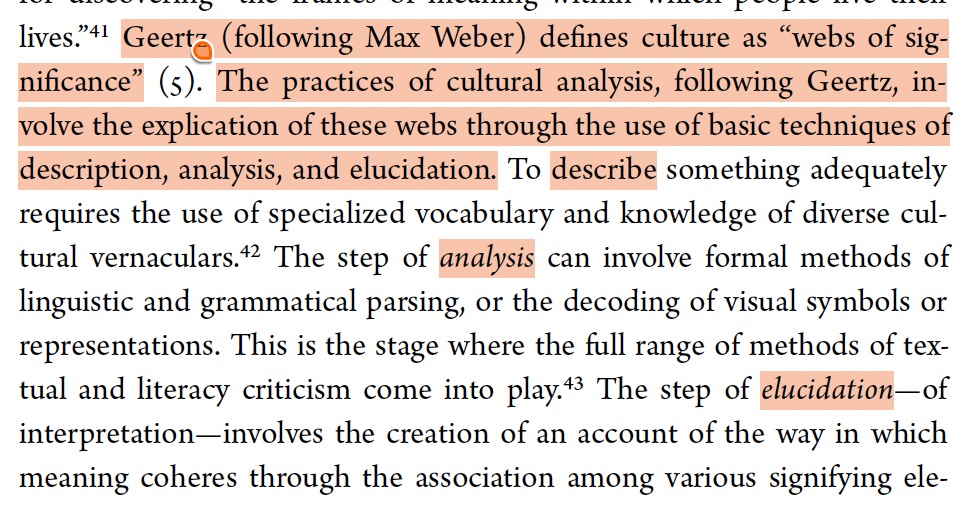
She argues for the employment of hermeneutic studies in studying technology, stemming from
Clifford Geertz's method of cultural analysis (description, analysis, and elucidation.)
Hermeneutic Reverse Engineering = Chicane?
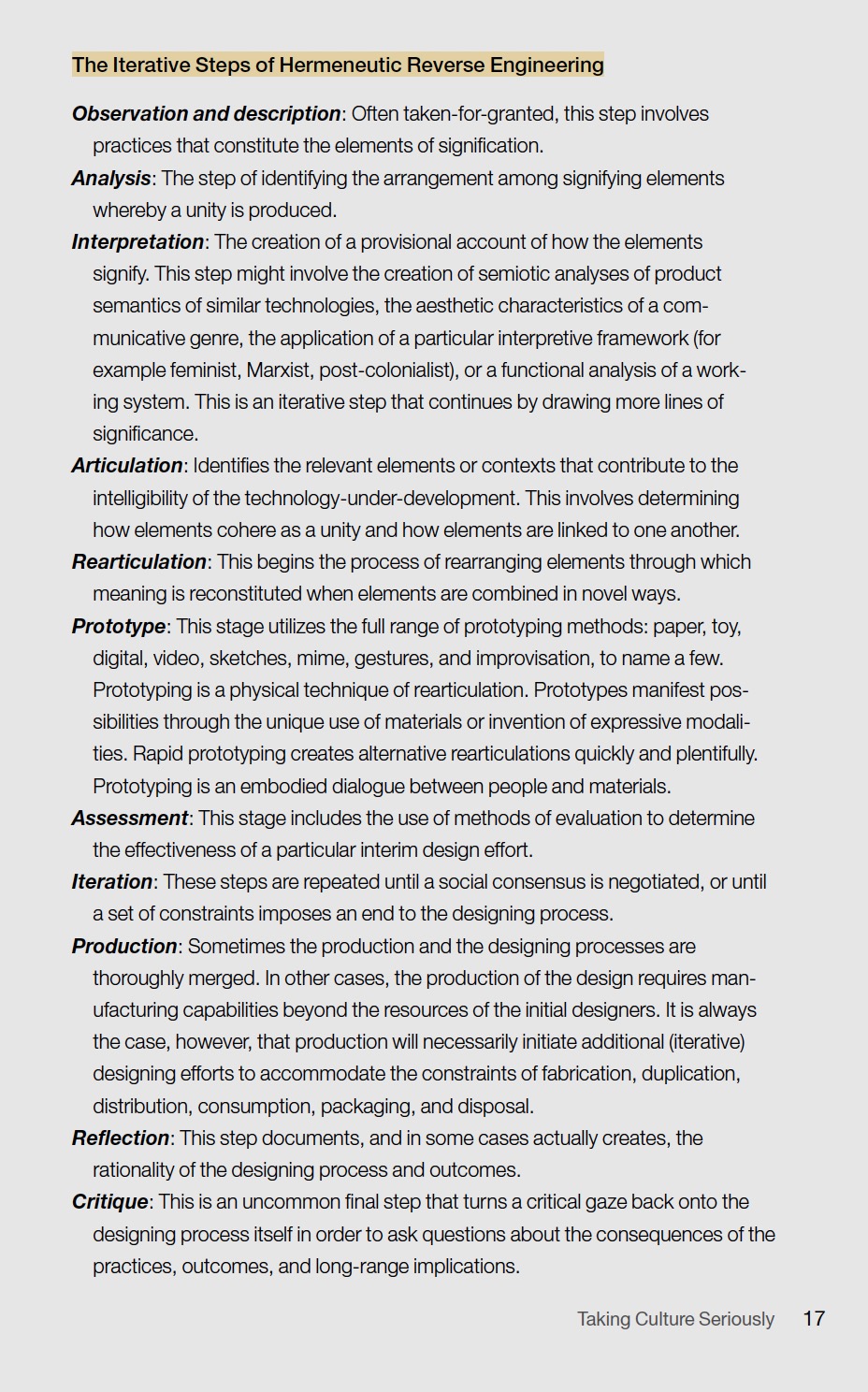
She then expands on Geertz's method with her introduction of hermeneutic reverse engineering.
Working backwards
from the construction of a functioning technology, a designer gains
useful information for the creation of a novel technological instance. In the
application of hermeneutic reverse engineering, what is reverse-engineered
are the elements that contribute to the meaning of a given technocultural
formation.
I started drawing parallels with her methodology with those of divination practices. To perform a
chicane, the diviner must possess a deep understanding of the signs and symbols to be "manipulated",
considering the understanding of the client. They then "reverse-engineer" the process of divination so
that they are able to deliver a certain message to the client. With this methodology, I then wonder
if I could perform a chicane on divination practices that occur through technology, devices and the
internet?
Critical Journal
I then reflected on Gideon's sharing in week 2 to understand how my project will be conducted under
the critical journal framework.
A critical journal is developed
around one’s own practice with
external examples being discussed
where relevant at each stage of the
exploration. In an iterative fashion,
ideas (thinking) and production
(making) are connected through
the acquisition and application of
knowledge.
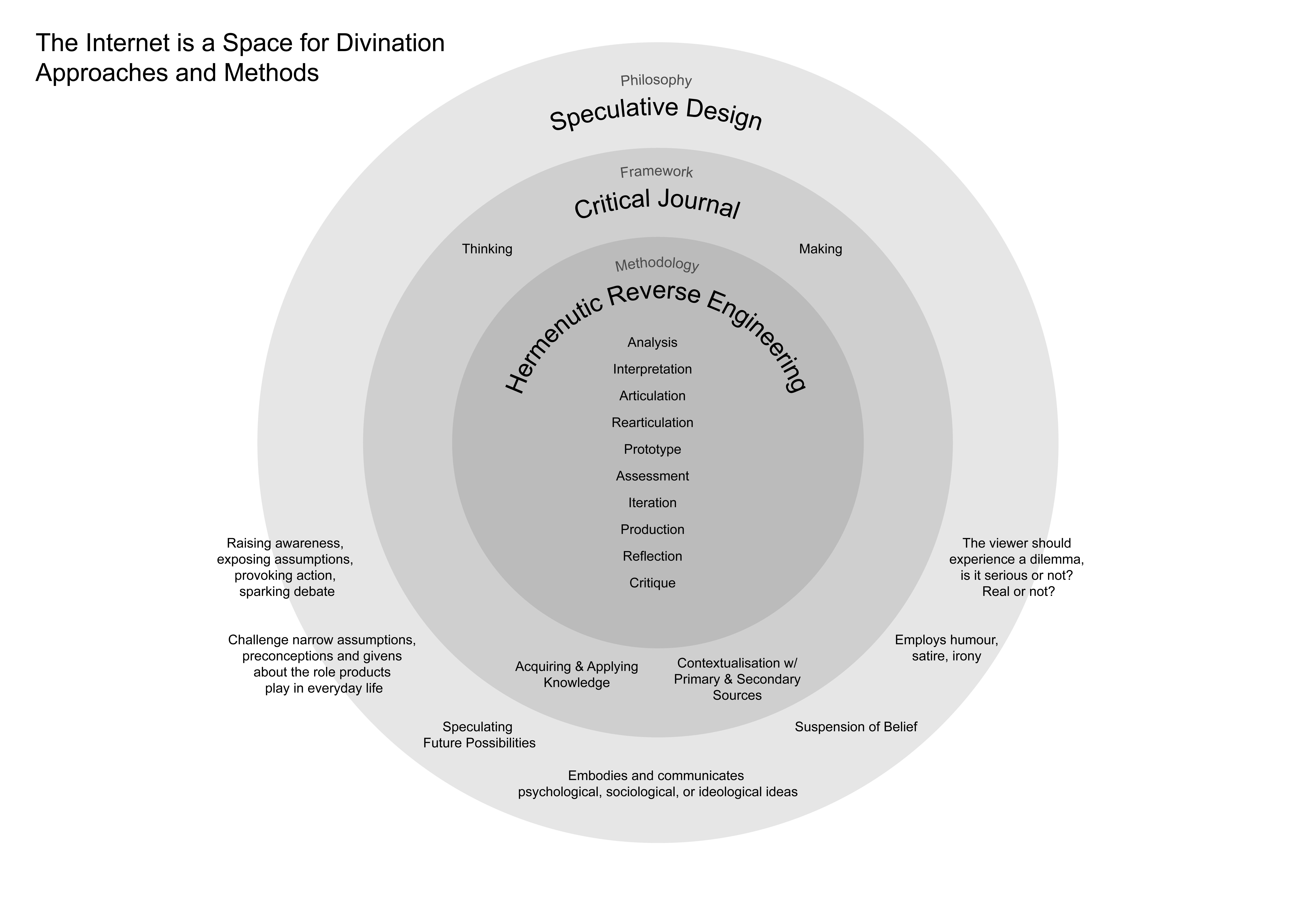
The hermeneutic reverse engineering methodology offers ways of acquiring knowledge about elements of signification in a site or object of divination, which is crucial for a practice that is largely informed by the signs and metaphors. This process of acquisition will occur through first-person observations (interactions with devices/the internet) supplemented by secondary resources (existing literature). This will provide the foundation of the making process (rearticulation), starting the self-informing process of prototyping, assessment, iteration, and reflection. This making process will be informed further by the philosophies of speculative design, in which the designing process considers how an artefact embodies and communicates psychological, sociological, or ideological ideas. (Tharp and Tharp 74). The findings from these iterative processes of making and reflection will then be documented in the critical journal, in addition to relevant contextualisation against theories and ideas from my reading list.
An Experiment with Hermeneutic Analysis
Moon Blocks Simulator
I was a little lost with how to create a first experiment, so I started with something simple that my family has employed in places of prayer. Jiaobei, or moon blocks, are divination tools originating from China. The mechanics are simple, each block producing only 2 outcomes (up or down). When placed together, they make possible 4 outcomes.
Shèngjiǎo (聖筊, divine answer): One block flat and another block round is a 'yes' answer.
Nùjiǎo (怒筊, angry answer) also kūjiao (哭筊, crying answer) or méijiǎo (沒筊, no answer): Both blocks flat
facing floor is a 'no' answer. It is said that the gods are displeased or show disagreement with the
question, and this is shown in the way the blocks directly fall flat on the floor.
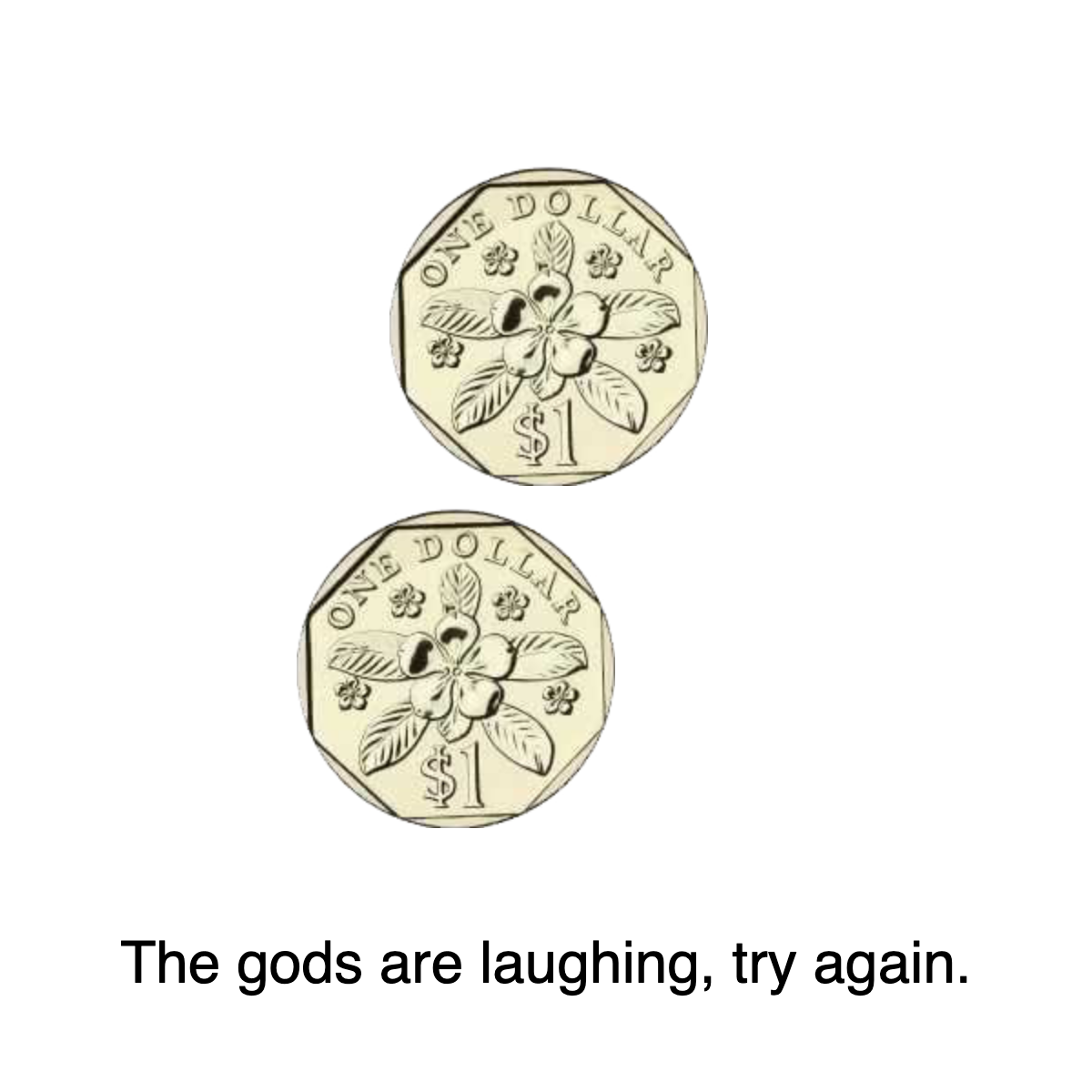
Xiàojiǎo (笑筊, laughing answer): Both blocks round facing floor have several interpretations; in any
case it is said the gods are laughing at the question depending on what has been asked. It can be
interpreted as an emphasized 'no' answer, the question that was asked was unclear, or that the answer
to the question is obvious. One characteristic of this answer is when the blocks sway back and forth
when dropped, a symbolic show of laughter.
Lìjiǎo (立筊, standing answer): One or both blocks falling but standing erect on the floor (so that the
block is standing up on the two pointed ends) indicates that the deities do not understand the
referent's question, therefore the question is nullified and the procedure must be repeated.
Round 1 – Jiaobei/Moon Blocks
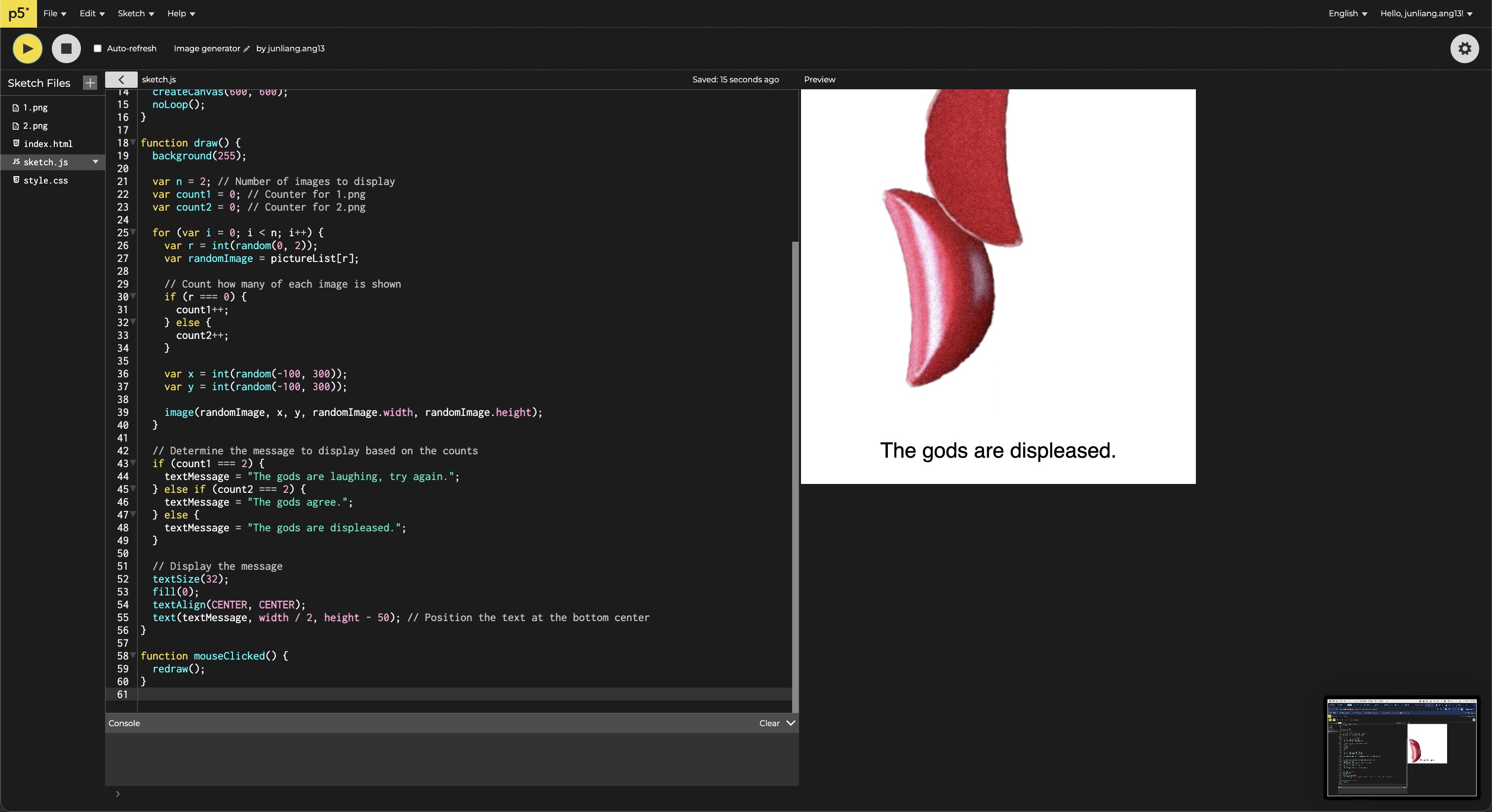
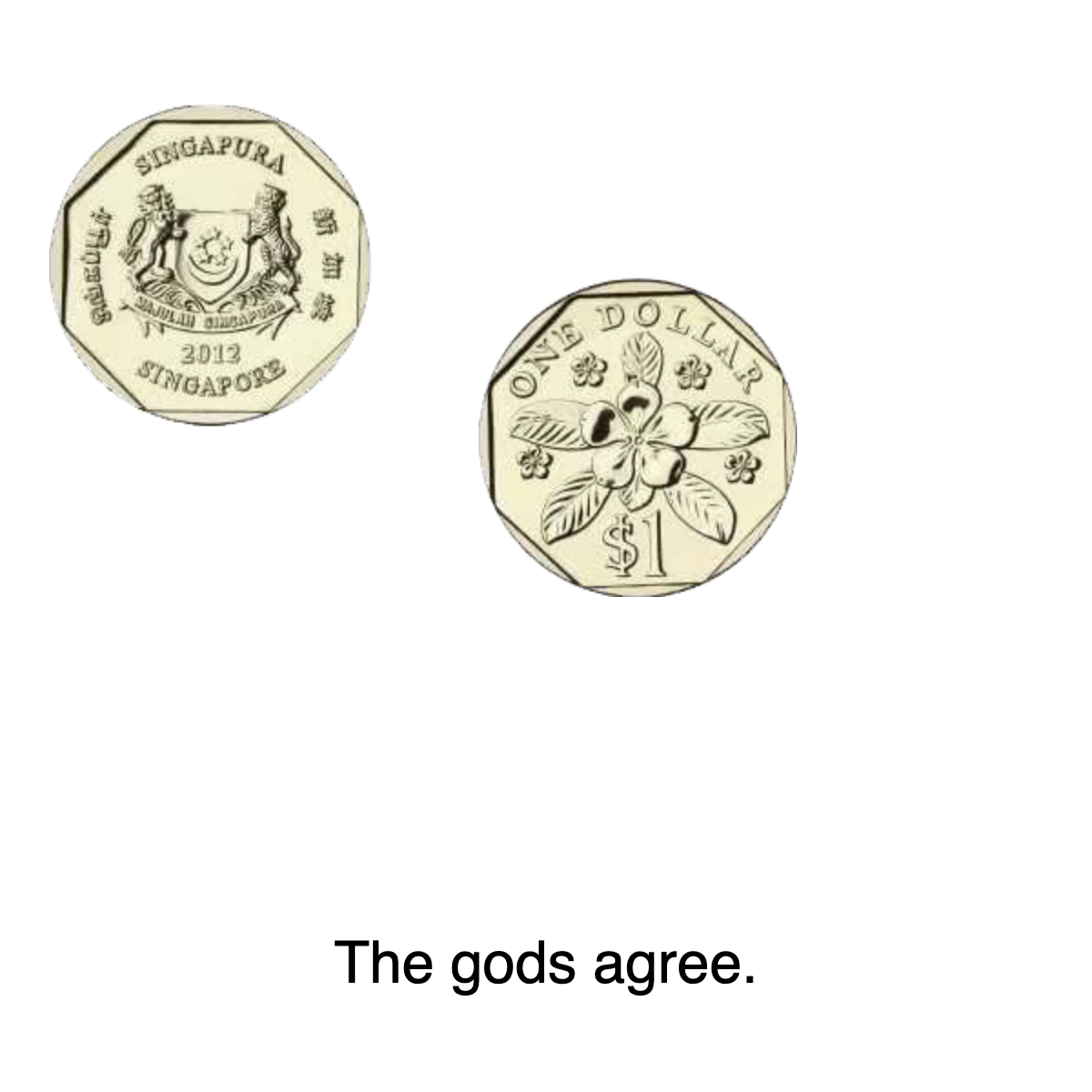
My first task was to translate this practise through code in p5js.I found an image generation template that selected images from the library at random, and displayed them in random positions across the screen. I then replaced the images with a block facing up, and another facing down.
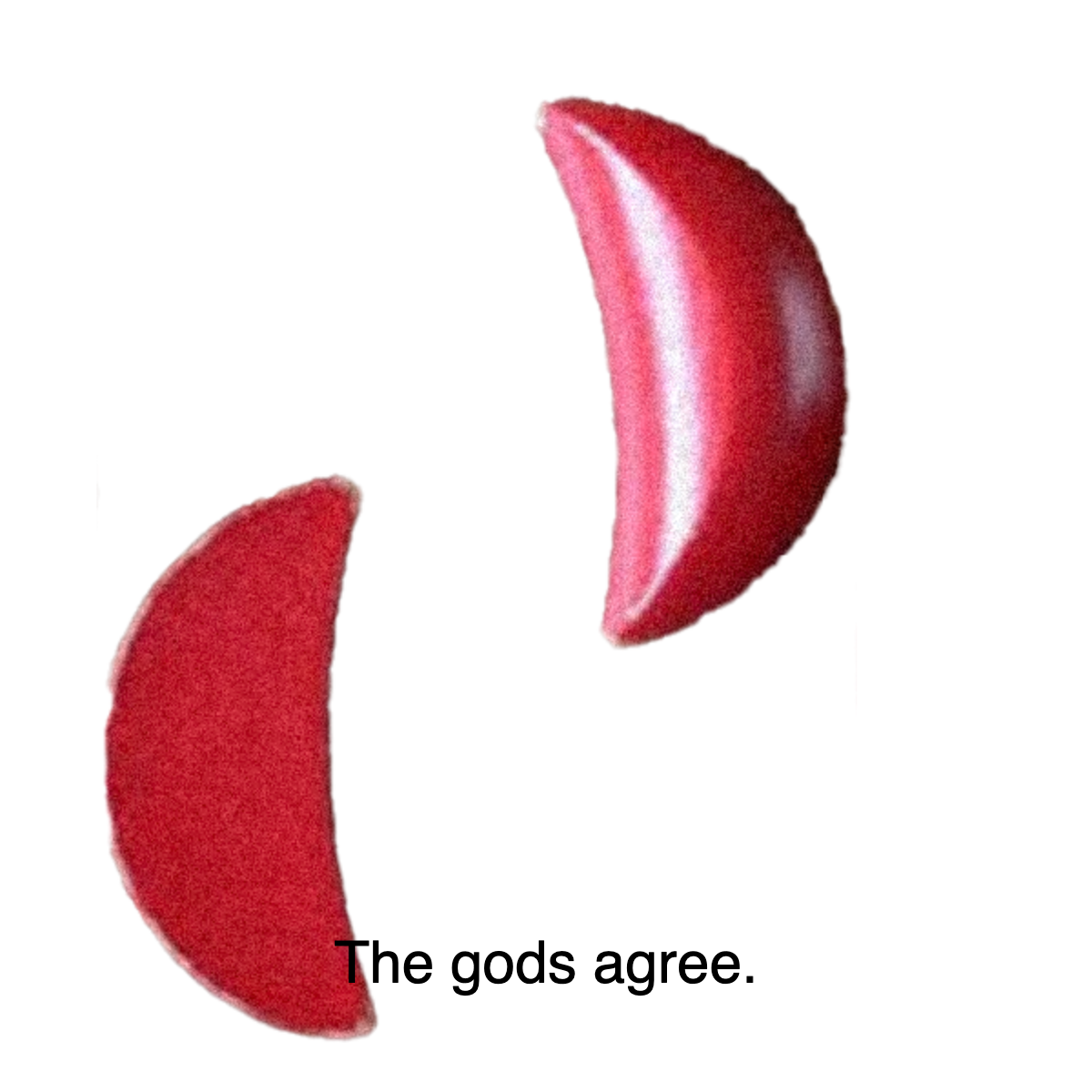
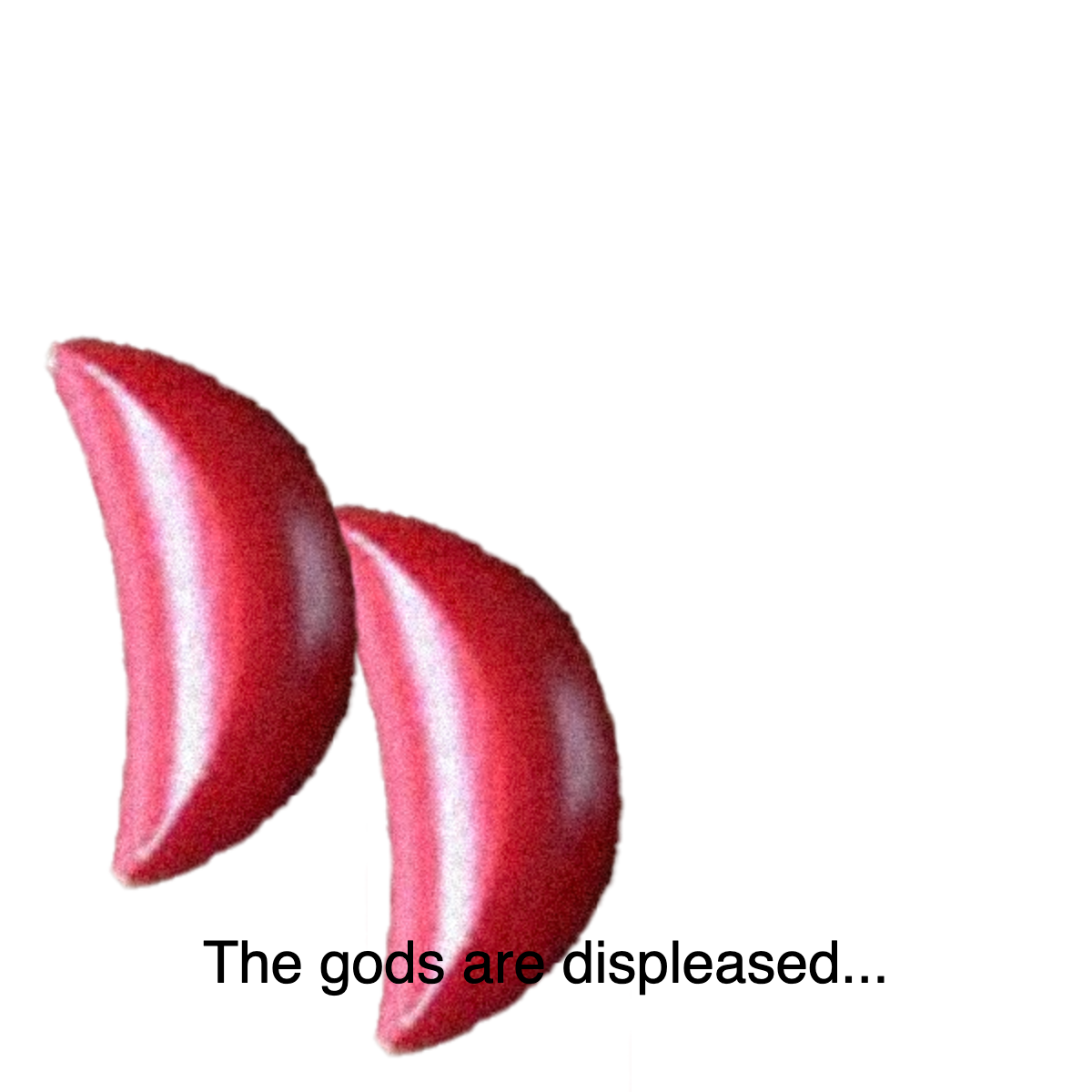
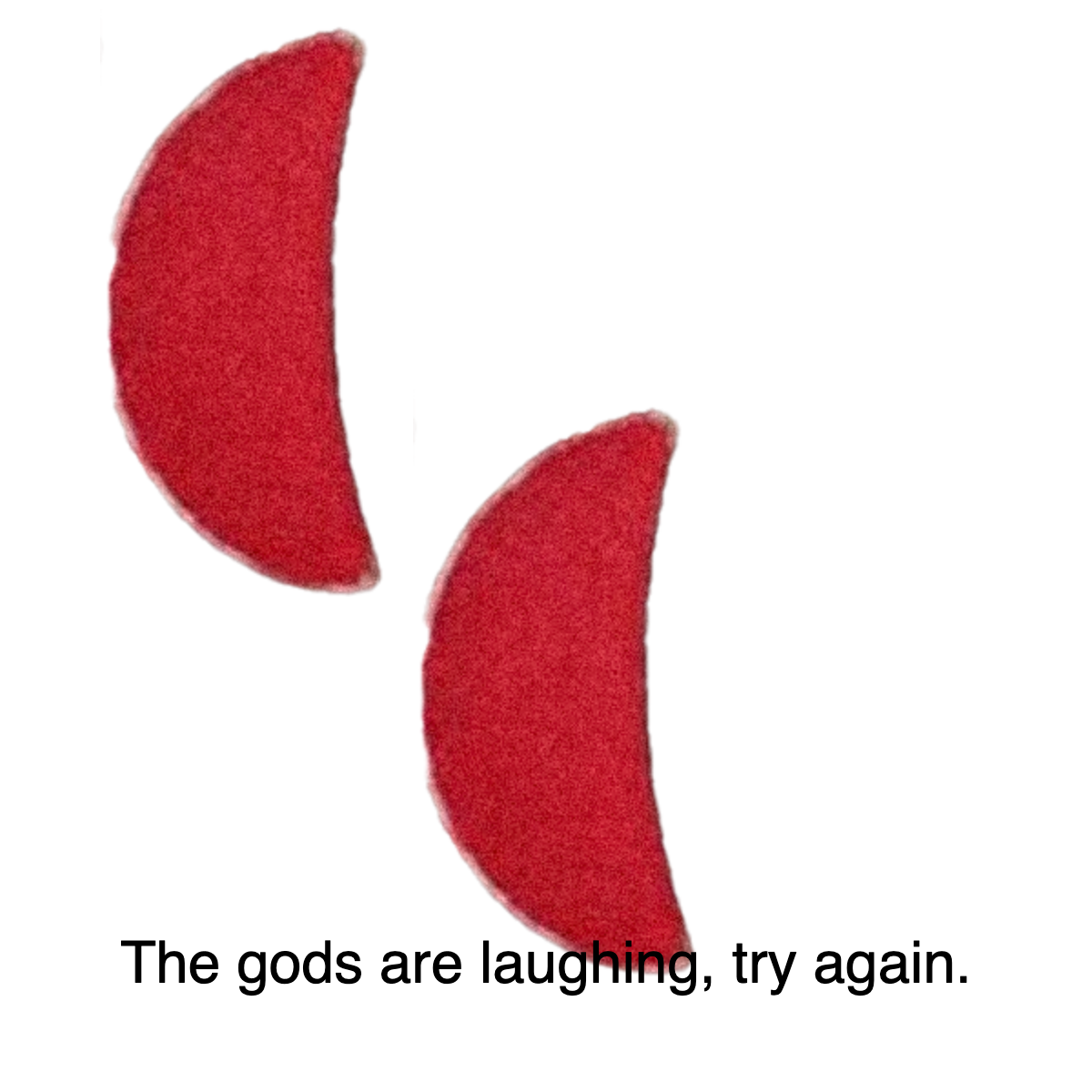
I noted that the random positioning of the images were an important signifier in the displayed
output. If the images were just generated at the same position every time, they would appear less
"real" or "random", as if they were actually thrown on the ground.
As Anne Balsamo wrote, it is important to observe the "arrangement among signifying elements
whereby a unity is produced." In which case, the signifiers here are:
1. The object (blocks)
2. The random placement
3. Text
—
The next step in her framework is Interpretation and Articulation, where we draw the lines between
signifying elements and context.
1. The object (blocks) – a form and colour already associated with a belief
2. The random placement – simulates the physicality of throwing the blocks
3. Text – describes the divine interpretation according to how it would be traditionally read
Round 2 – Coins
I then thought about the way my family practises this using coins. A different object is used, but because of the individual and the setting that it is used in, it bears the same significance, albeit altered for convenience.

Binary System of Chance
If I were to present the blocks as a black and white square, it would achieve the same outcome, but
it
would not bear the visual signifiers present that gives the divination its significance (specific to
the
individual). If I push this further, I would argue that this mechanism mirrors the way a computer
makes
decisions through a binary system – one we understand as 1s and 0s. If the binary system is truly
left
to chance, or instructed so, the computer then becomes an object where divination occurs infinitely.
This task has allowed me to further understand that there really are endless possibilities of chance that are practised through technology, it is just the re-articulation of signifiers and contexts around the mechanism that allows it to bear meaning. Understanding this will allow me to then re-articulate, or reimagine a possible iteration of this practise.