Week 3
Introduction to Speculative Design Approach, Mind Maps
Performing for a Stranger on the Internet
This week, we were tasked to bring a product that we have made as a starting point for our FYP. I was unfortunately caught up with work for Singapore Design Week and was unable to produce anything new. However, I decided to bring a project that I worked on for the last semester in DAE as a potential starting point.
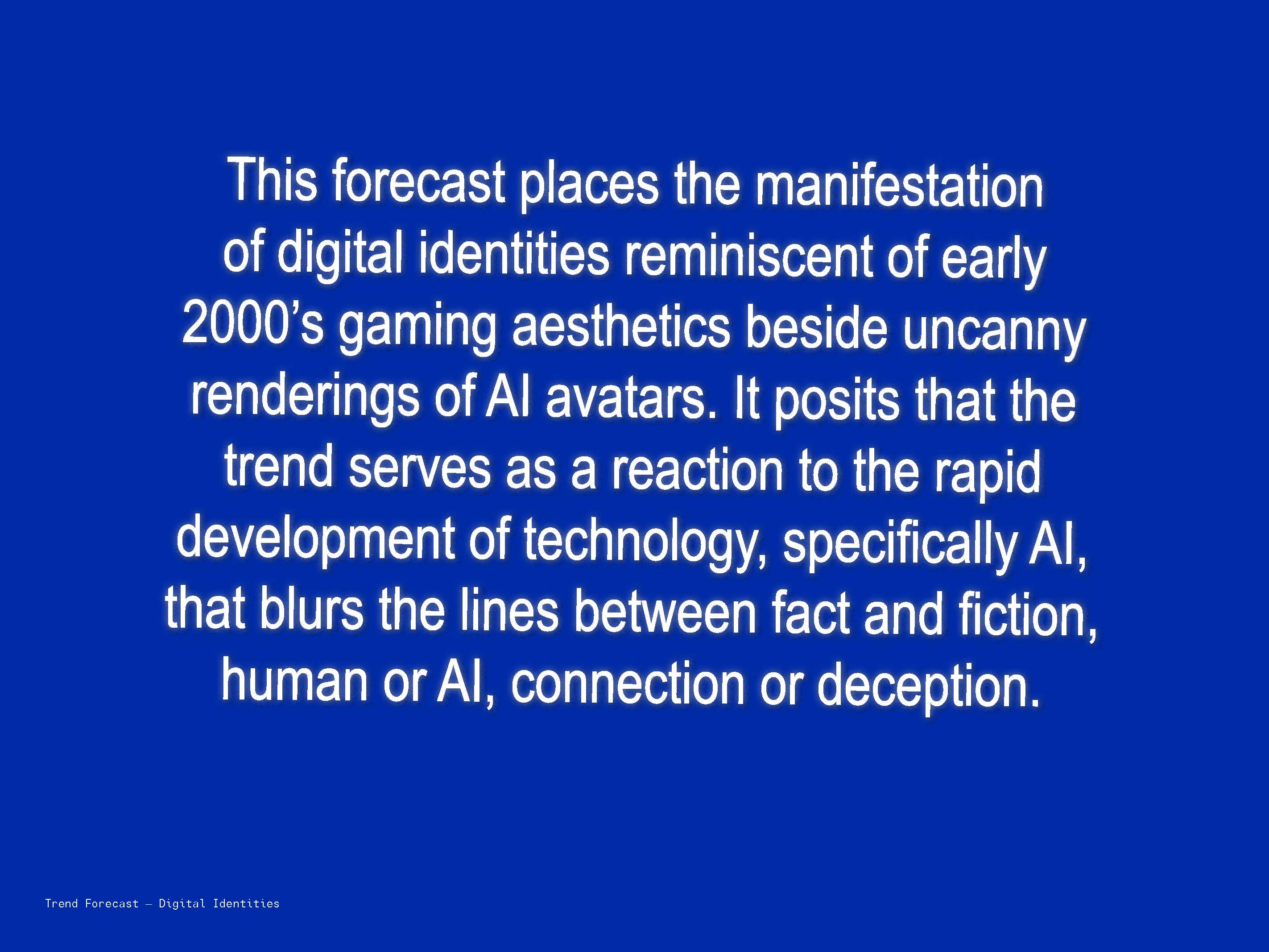
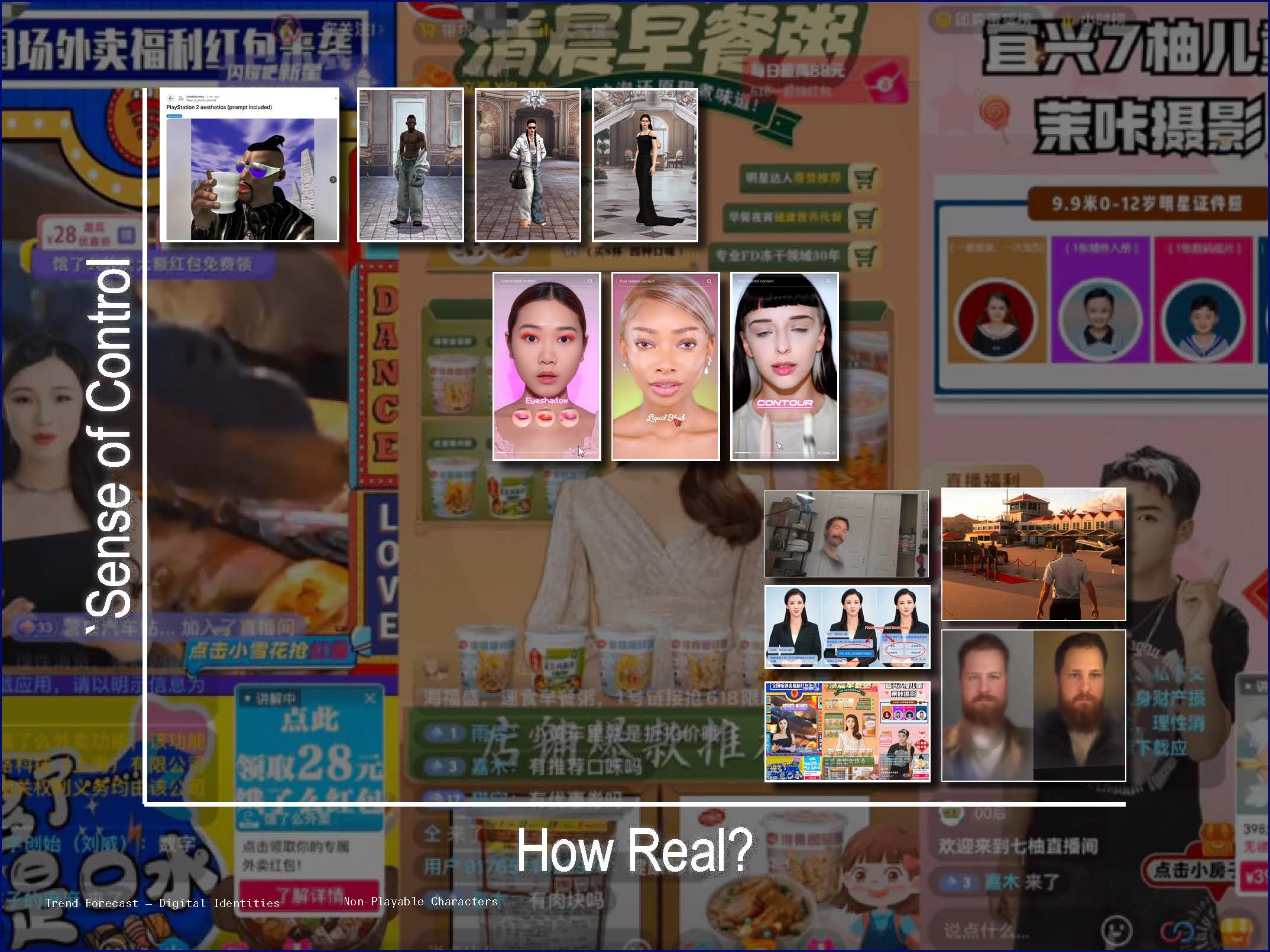
Performing for a Stranger on the Internet started off as a exploration into our online identities and how they have increasingly become intertwined with our offline identities. Done in a class for trend forecasts, I studied the trend of NPC simulations on TikTok and theorised that there was an rising discourse around the agency of our own bodies and others online.
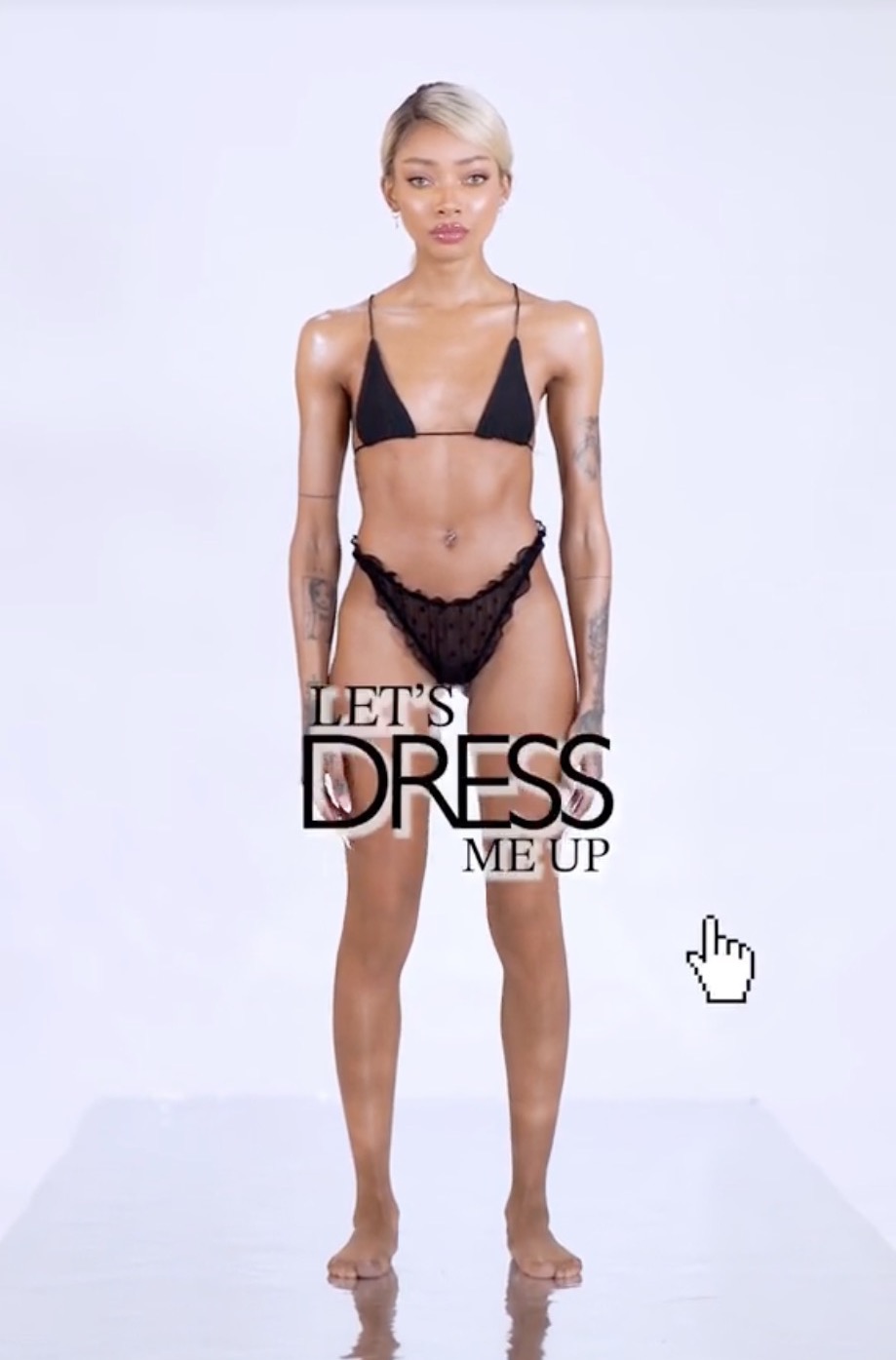
The outcome was an interactive installation in which the audience speak to an unknown entity across the screen that has them performing a series of activities ranging from a thumbs up, a wink, to bringing a potted plant to please the entity. This allowed the audience to step into the shoes of the NPC avatars on the internet, allowing them to question their own interactions with strangers on the internet through an embodied performance.
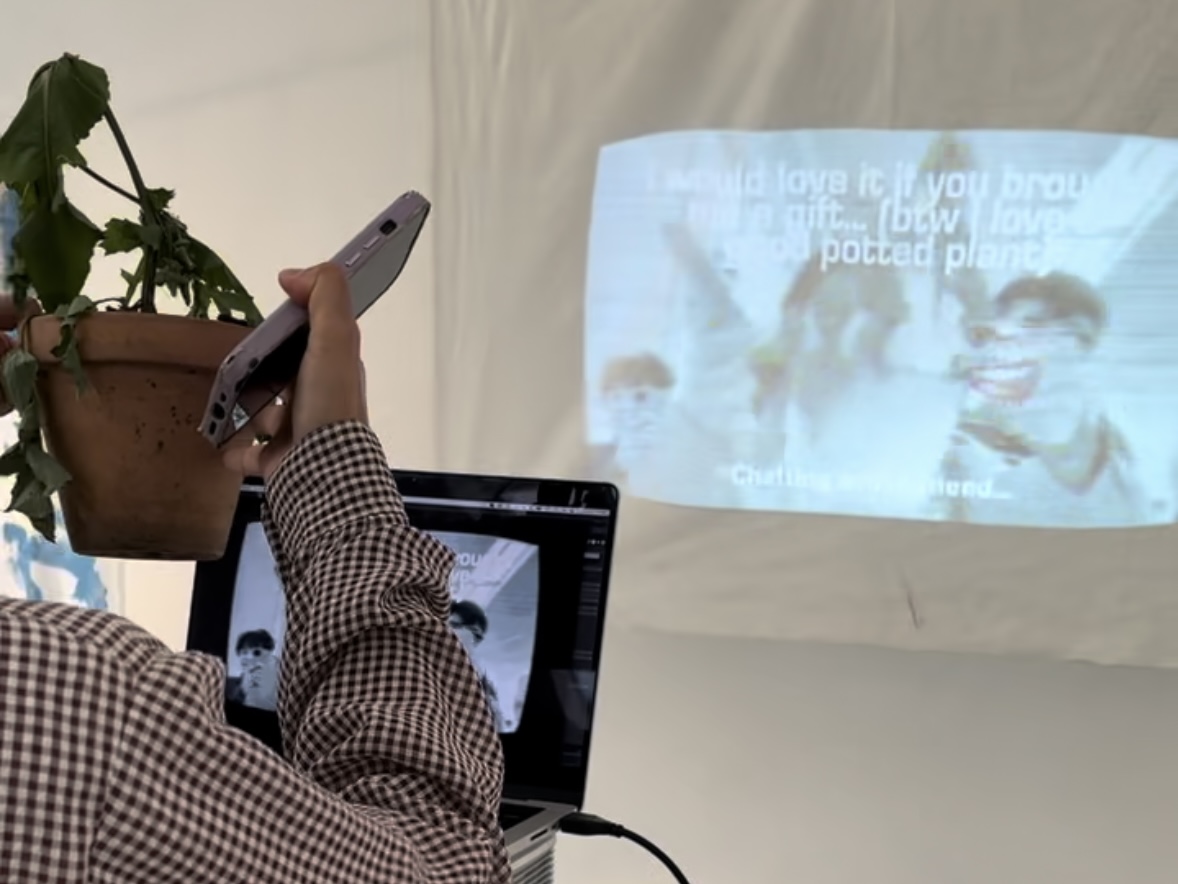
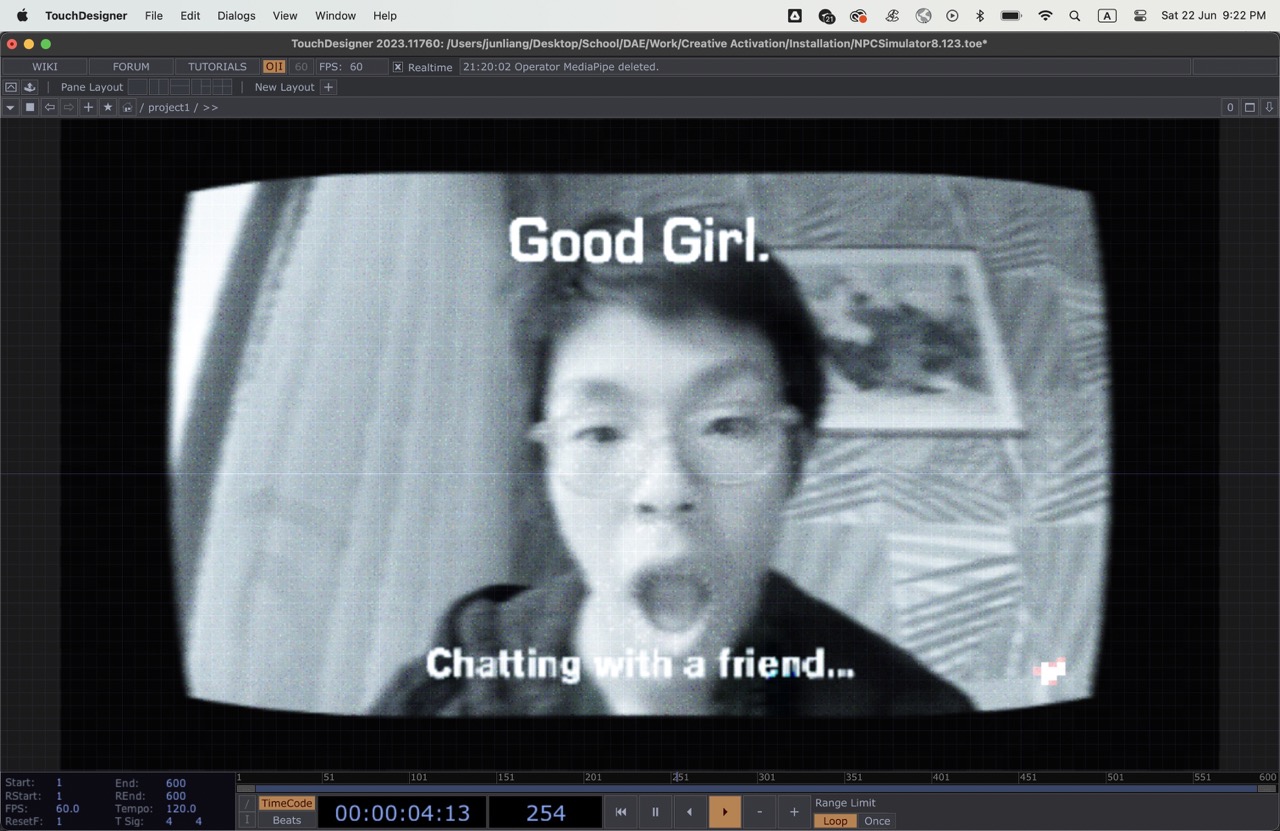
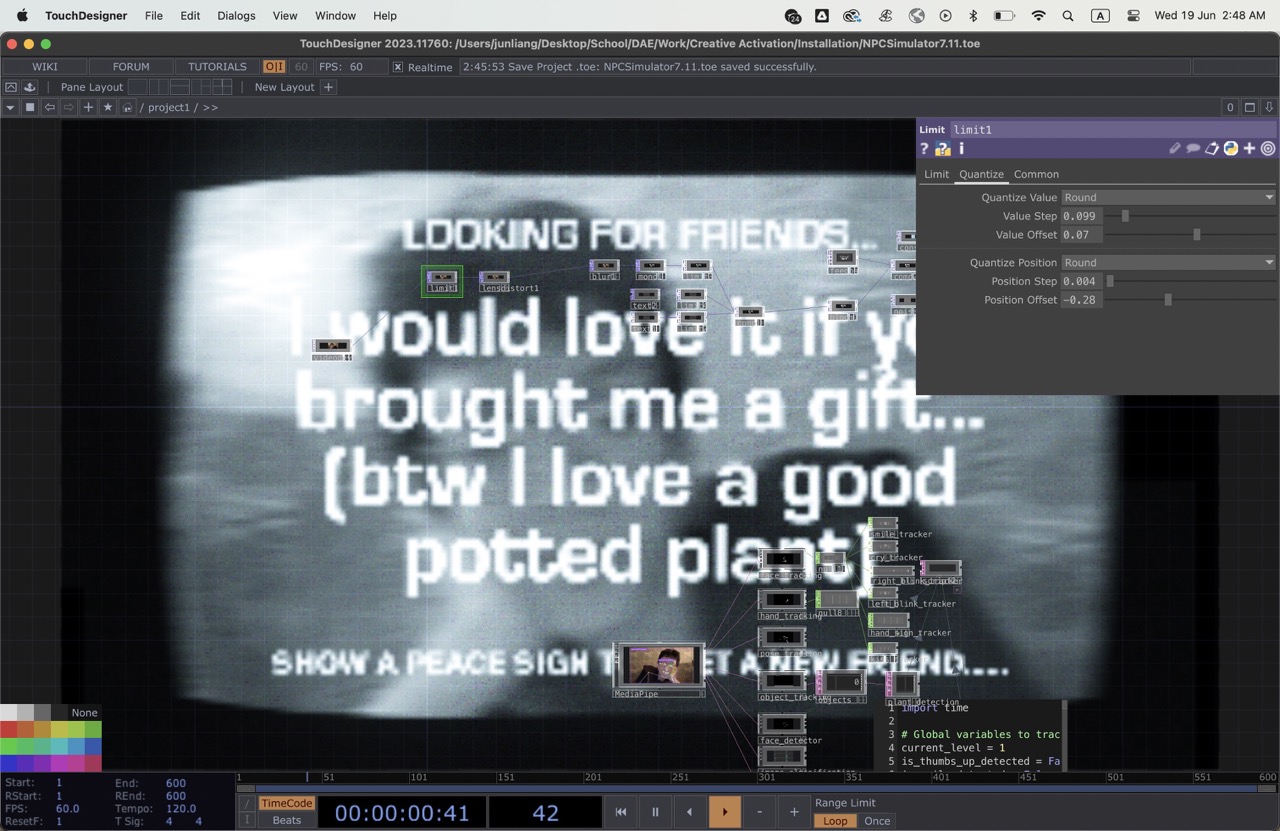
I really enjoyed this exploration with the audience, as that really allowed me to
communicate the discomfort of losing your own bodily agency to a stranger on the internet.
I would love to take what I learnt from that experience and explore more interactive
experiences in this project. I was then curious about how I could expand on this through
the
lens of speculative design.
Introduction to Speculative Design
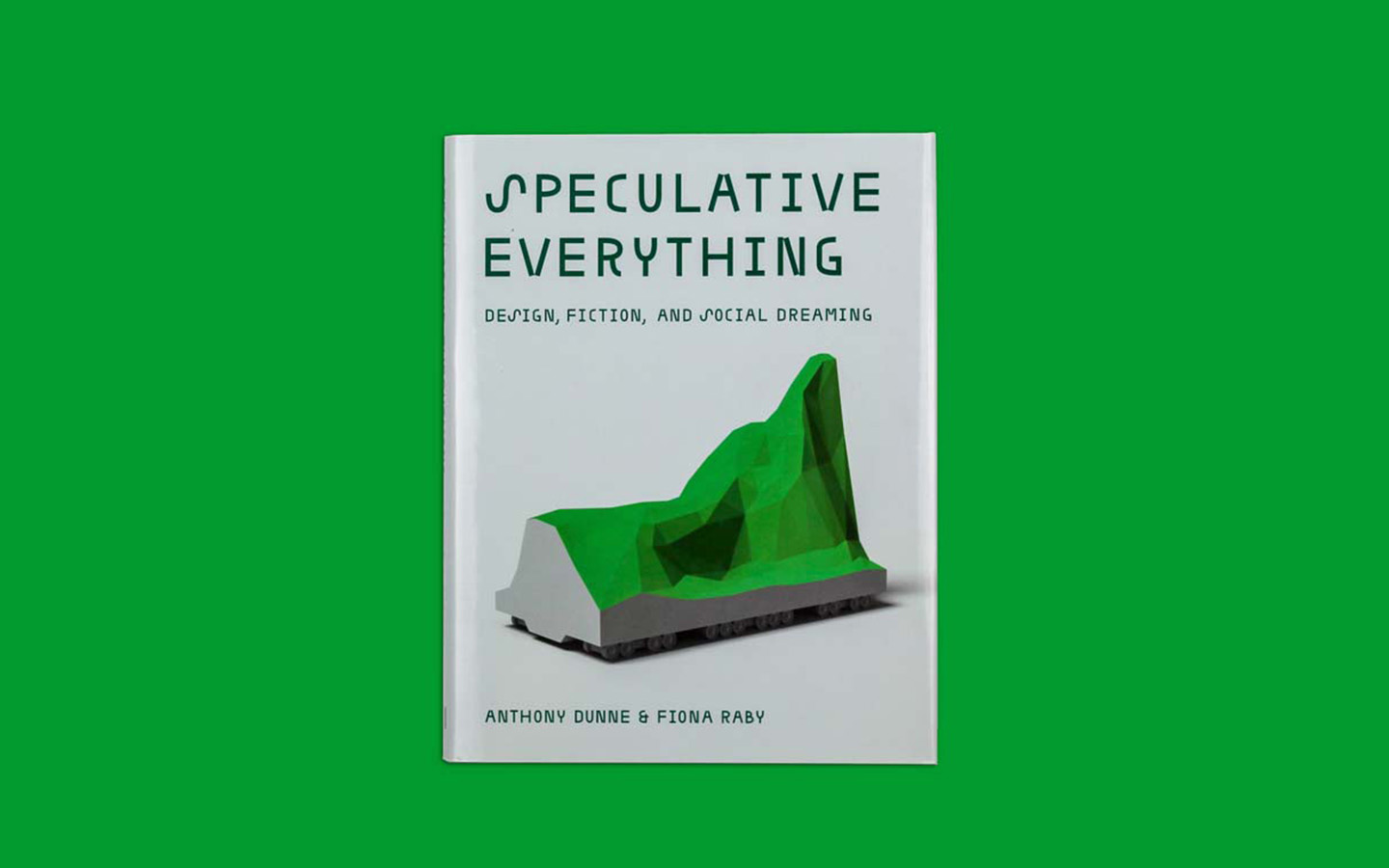
I started my readings about speculative design with the book Speculative
Everything by Dunne and Raby. It was a great starting point for me to understand
why people practise speculative design, and they gave me the vocabulary for what I've
wanted to do with my practise for a while. I've never been too interested in
prioritising user functionality or corporate gain in my designs, but I've always wanted
to address issues that I think about daily.
As the writers put it:
"Design’s inherent optimism leaves no alternative but it is becoming
clear that many of the challenges we face today are unfixable and that the
only way to overcome them is by changing our values, beliefs, attitudes, and
behavior...This form of design thrives on imagination and aims to
open up new perspectives on what are sometimes called wicked problems, to
create spaces for discussion and debate about alternative ways of being, and
to inspire and encourage people’s imaginations to flow freely. Design
speculations can act as a catalyst for collectively redefining our relationship
to reality."
Man Eat Man Deli — Zine
I then reflected on a zine that I made for Singapore Art Book Fair in 2023 –
titled "Man
Eat Man Deli". I created this zine during a time where I was consuming a lot of
content
about increasingly divisive opinions on the internet. While opinions seem
incessantly
divisive online, I noticed that having conversations with people who hold
different
opinions from yourself IRL is such an important tool for understanding the
perspective
of others. At the same time, I was also reading up a lot about cannibalism and
how it
was a practise that was extremely divisive (for obvious reasons), despite being
one that
was practised for many reasons in different contexts.
My question in creating the zine was therefore:
If we can study a practise as taboo as cannibalism and understand why
it was
considered "ethical" in certain contexts, why can't we hold that same
respect for
differing opinions that others carry in our daily conversations (especially
those we
see on the internet)?
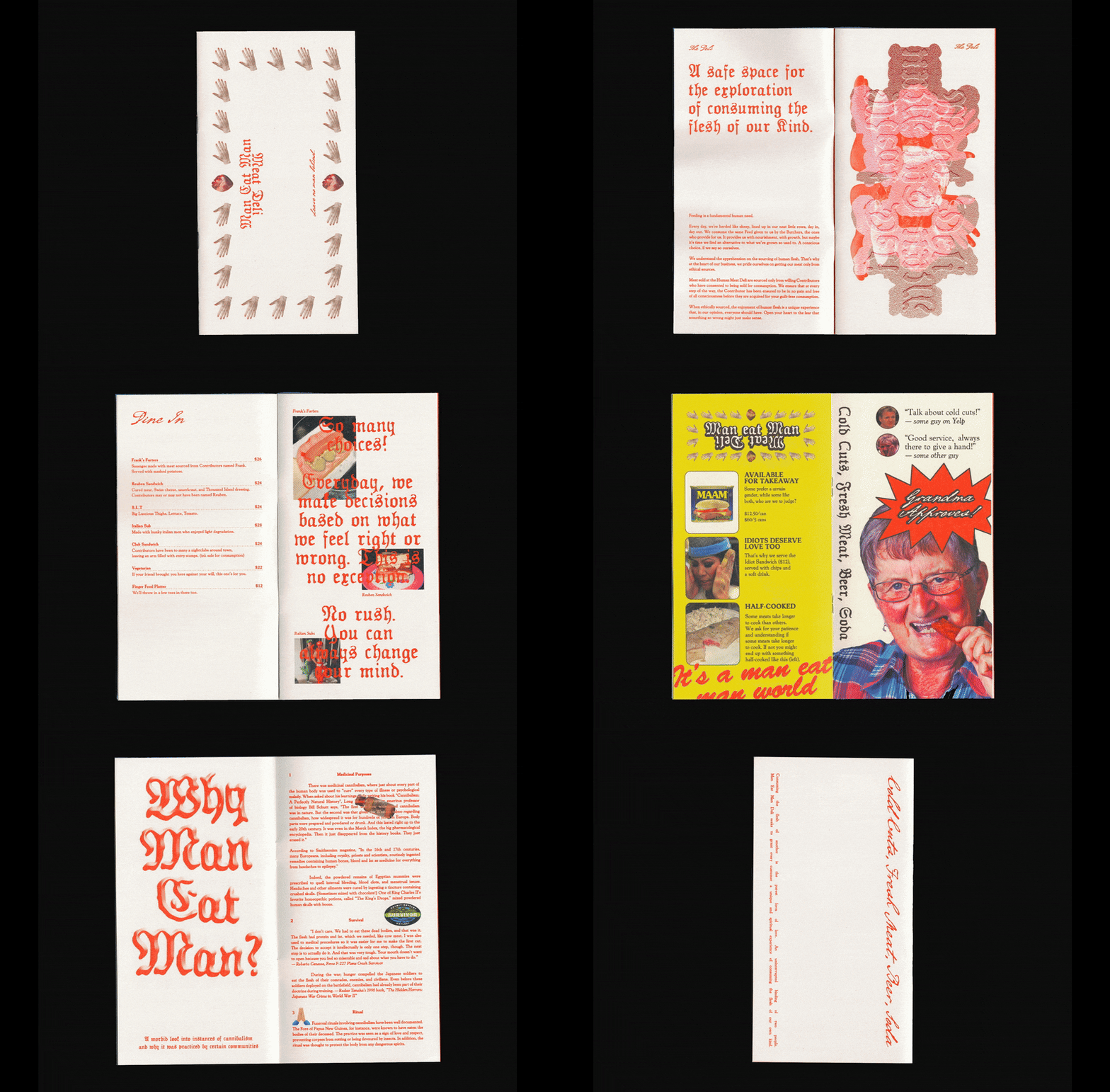
In retrospect, putting all my thoughts into a zine posing as a menu for a cannibal deli was my own way of practising speculative design/design fiction. I tried to put my thoughts into a context that would be shocking and attention-grabbing, so I was able to help the readers understand the message from a different perspective.
The book also discussed different methodologies that artists/designers have used
for
creating fictional worlds (i.e. Utopia/Dystopia, What-Ifs, Extrapolation,)
"Rather than thinking about architecture, products,
and the environment, we start with laws, ethics, political systems,
social beliefs, values, fears, and hopes, and how these can be translated
into material expressions, embodied in material culture"
As exhibited in the project by Matthew Barney, his own understanding of gender
struggles have been extrapolated into a fictional world that is "idiosyncratic
to
the extreme, an externalization
of his own inner world that can only be aesthetically appreciated by
others. It is art at its purest—noninstrumental, personal, subjective,
and profoundly beautiful."
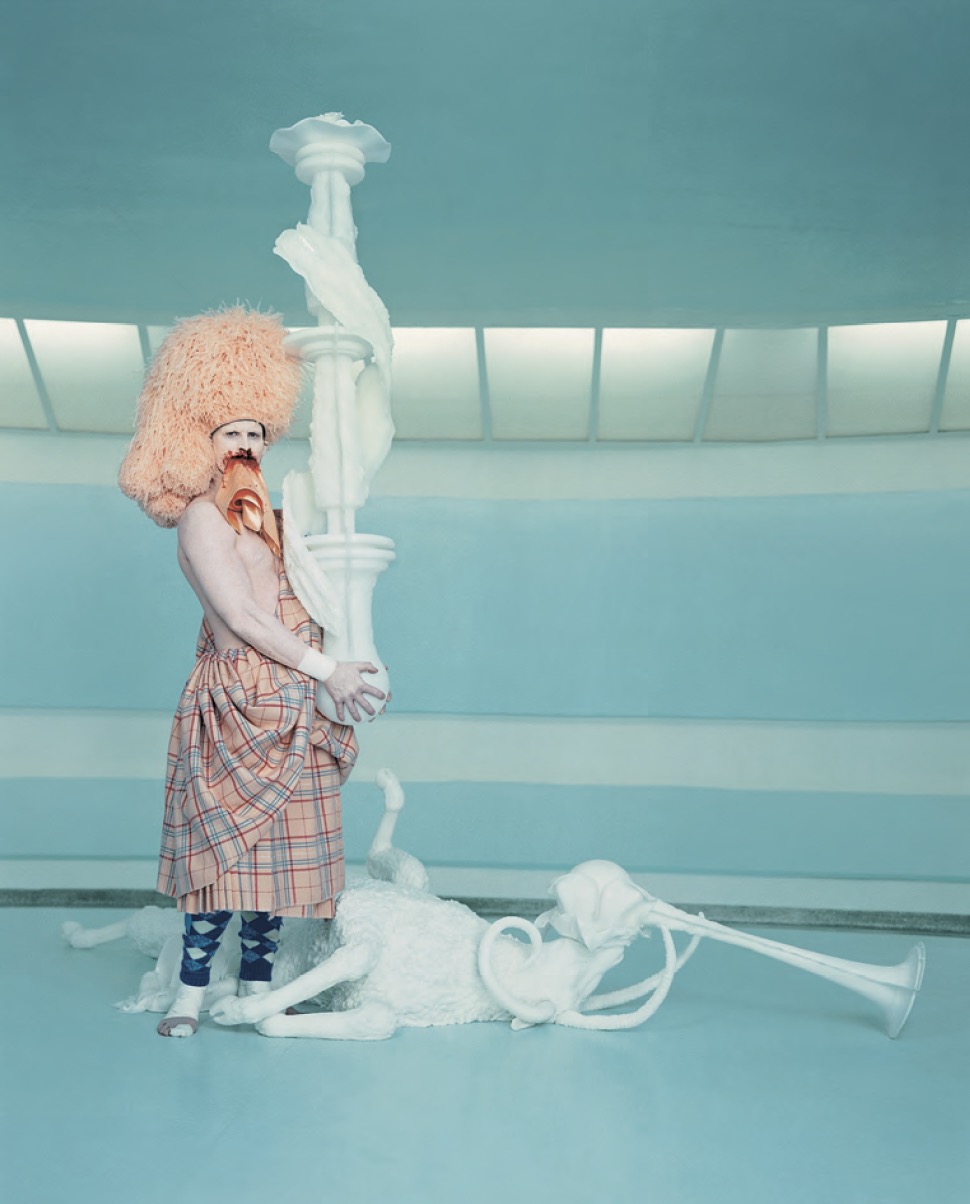
Matthew Barney, Cremaster 3, 2002, production still.
I then started formulating some questions for myself to guide my research/design
process.
- What fields can I branch out my study into to materialise my fictional
world?
- What are some metaphors that I can use to craft the narrative?
- What are the systems/beliefs that I could study to better understand spiritual
interactions on the internet?
I decided to pen my thoughts down into a mind map.
Mind Map 1
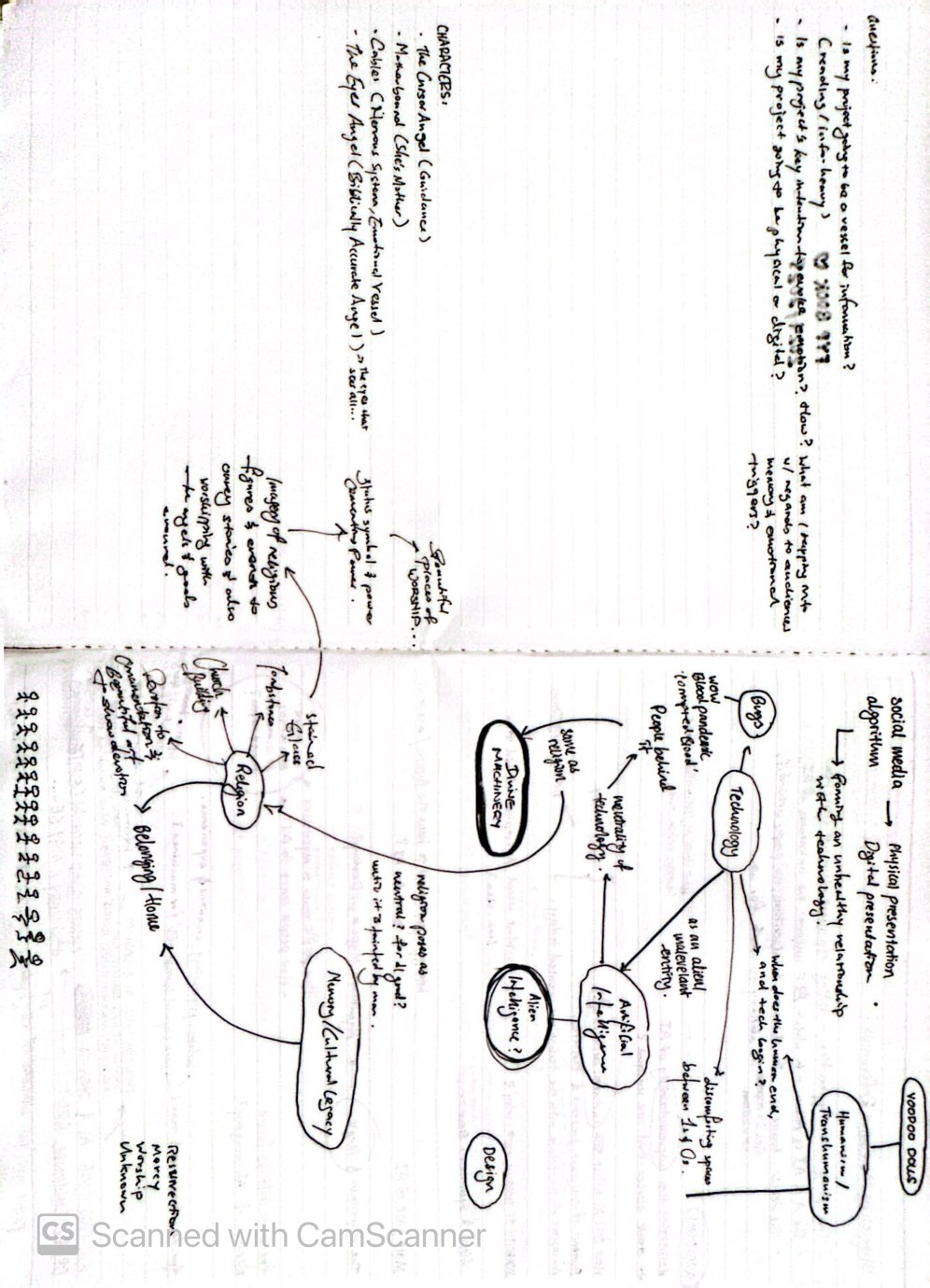
This mind map had me thinking about the neutrality of technology/religion as a source for the formation of cultural memories. However, I realised that I was jumping the gun by thinking specifically of metaphors and objects, while also being too broad on the kind of spirituality I wanted to look into. So I tried another mind map.
Mind Map 2
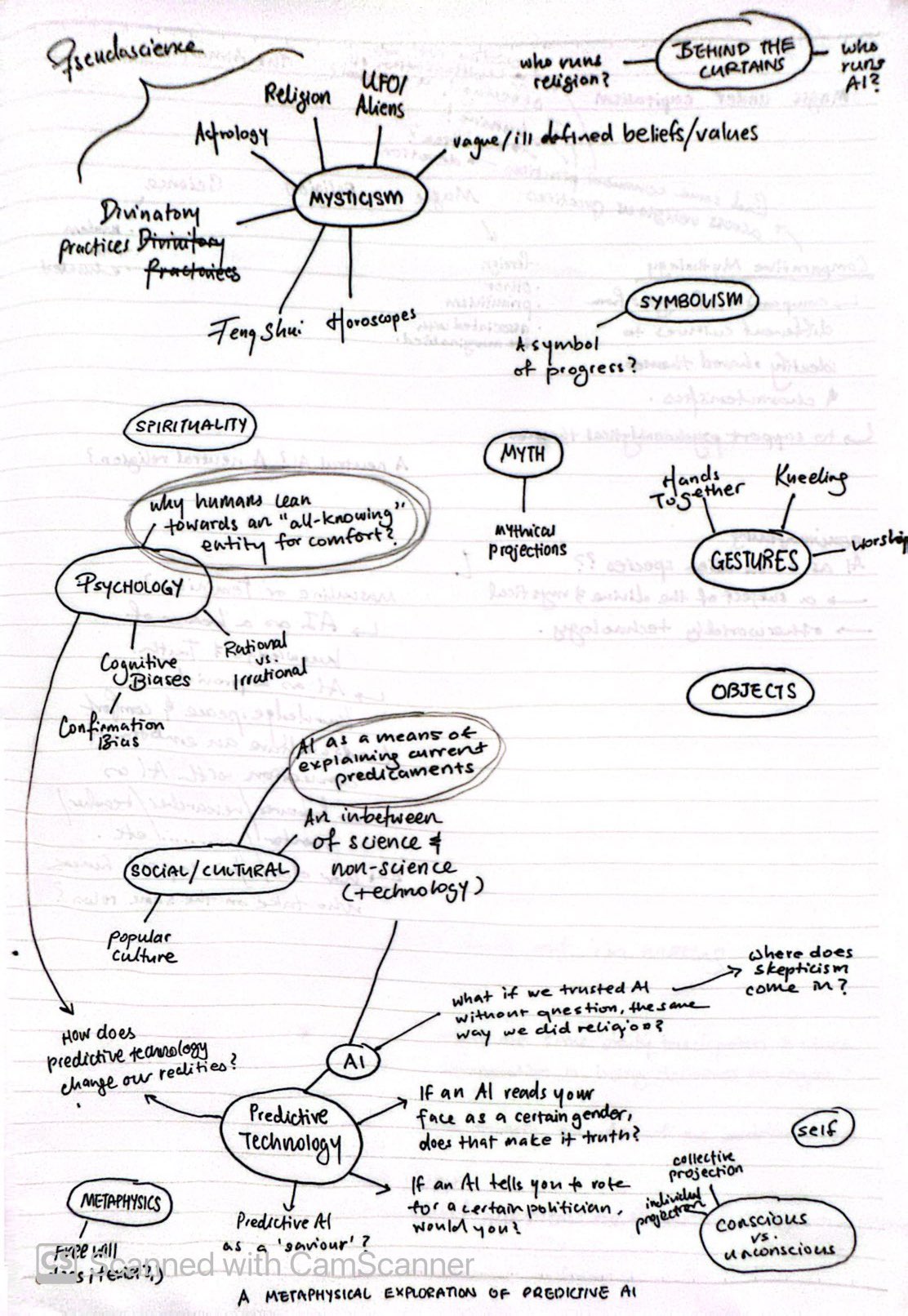
In this mind map, I branched out to explore different forms of mysticism that I could
explore like astrology, religion, ufo/aliens, etc. I also identified the subject of
psychology that I could use to understand why people seek spiritual guidance
regardless of the platform/medium.I decided that my study would toe the line of
science and pseudoscience, or what I can identify as "rational" vs
"irrational".
I also wanted to understand better how we "irrationally" and "rationally" interact
with AI – if I positioned AI almost as a more-than-human, all-knowing entity. No
religion is truly neutral, just like no media is truly neutral. We probably know
that no AI is neutral. Predictive AI, for example, is trained on data that
was curated and created by people, who are in no way neutral. This therefore makes
it valuable to understand better how we interact with AI and what we choose to take
from platforms like ChatGPT.
I also thought about the importance of myths and symbols in religions and
cultures.
Symbolism of UFO
For instance, the myth of aliens - specifically extraterrestrial life - is
synonymous with alien technology. (UFOs, communication devices, etc.). The
UFO is thought as a symbol in the unconscious of people - invisible until
they are brought into consciousness - even then, the meaning has to be
completed by amplificatory interpretation (using mythological, historical
and cultural parallels to “amplify” the symbols in the unconscious).
“As Carl Jung
described almost 70 years ago, the flying saucer was a new symbol for
the sacred, a
type of technological angel. The UFO is the harbinger of the new
cosmology, the
non-binary, non-hierarchical monistic spirituality of the nones.”